BSL-3 laboratory standards
BSL-4 lab design requirements
Biocontainment laboratory setup
High-containment disease research labs
BSL Laboratories III & IV: Ensuring Safety and Biosecurity in Disease Research
In the current landscape of emerging and reemerging diseases, biosecurity and biosafety are vital to protecting both human health and the environment. With zoonotic diseases such as Avian Influenza, Rabies, Tuberculosis, Anthrax, Brucellosis, and Leptospirosis posing a significant global risk, the need for high-security laboratories capable of handling high-risk pathogens is more pressing than ever. These are the exact challenges that BSL Laboratories III & IV address—offering the highest level of containment and safety for conducting critical research in the fight against deadly diseases.
BSL Laboratory Overview
Bio-safety Level (BSL) laboratories are designed with specific containment measures to protect researchers, the community, and the environment from potentially dangerous pathogens. The BSL system is categorized into four levels, each designed to handle progressively more dangerous biological agents. BSL-3 and BSL-4 laboratories are the highest levels of containment, created to safely handle pathogens that pose significant risks to both individuals and communities.
The growing complexity and potential for zoonotic diseases to spread across regions have emphasized the need for state-of-the-art BSL Laboratories III & IV. These specialized facilities are crucial for the detection, analysis, and research of high-risk pathogens, ensuring that scientists and medical professionals have the ability to contain and study dangerous viruses safely. These laboratories adhere to the stringent guidelines set by the World Health Organization (WHO), USFDA, and EN to prevent contamination and ensure safety.
Project Understanding: Building a Safe Environment for Advanced Research
Setting up a BSL-3/BSL-4 Laboratory requires a detailed understanding of the risks involved and a commitment to the highest standards of biosafety. At KAVS Spectronova Technologies Pvt. Ltd., we specialize in creating these critical facilities that comply with global guidelines for handling high-risk pathogens, including both known and uncharacterized viruses. These laboratories play a vital role in medicine and research, as they are essential in detecting and analyzing viruses that may cause epidemics.
The BSL Laboratories III & IV we design are not only meant to contain these dangerous pathogens but are also strategically engineered to support cutting-edge research with minimal risk. This means considering both the internal and external environment in the design, ensuring that each laboratory meets the highest safety and functional standards.
BSL Laboratories III and IV will serve as hubs for safe research and testing of pathogens, and the need for these high-security labs in pharmaceutical and medical research is critical. These laboratories ensure that there is no risk to the personnel working within the facility, nor to the surrounding environment, by utilizing advanced systems for air filtration, exhaust treatment, and waste management.
Biosafety Levels: Understanding the Four Levels of Containment
BSL Laboratories are classified into four levels, each designed for specific types of research. These levels are defined by the types of pathogens that can be handled within each laboratory
-
-
- BSL-1: Deals with agents that do not typically cause disease in healthy adults.
- BSL-2: Deals with agents that can cause human disease but are usually not severe and have a vaccine or therapy available.
- BSL-3: Handles pathogens that can cause serious or potentially lethal diseases through inhalation, such as tuberculosis, yellow fever, and SARS-CoV.
- BSL-4: The highest level of containment, used for handling dangerous and exotic pathogens that pose a high risk of life-threatening diseases, such as the Ebola virus or Marburg virus.
-
BSL-3 and BSL-4 laboratories are essential in supporting research on pathogens that are highly infectious and have no current cure or vaccine. For instance, in the case of viruses like the Ebola virus, which has a high fatality rate, working in BSL-4 labs ensures maximum containment and protection.
Land and Built-Up Area Requirements
Designing a BSL-3/BSL-4 Laboratory requires careful planning of space and functionality to ensure the safety and efficiency of operations. The total built-up area required for these labs is approximately 200 square meters, providing enough space for key areas such as lab workspaces, utility rooms, and personnel facilities.
Tentative Layout Overview:
A typical layout for a BSL-3/BSL-4 Laboratory includes specific zones for the safe handling and containment of infectious materials. The following is an overview of the key areas included in the design:
- Most Negative Pressure Lab for BSL-3/BSL-4: This section of the laboratory is responsible for maintaining the highest containment levels. The lab, located on the ground floor, has a size of 45 square meters and ensures that negative air pressure is maintained at all times, preventing the escape of potentially harmful pathogens into the surrounding environment.
- Ante-Rooms, Entry and Exit Areas: This area, covering 105 square meters, is critical for safe entry and exit procedures. It includes changing and gowning rooms, quarantine spaces, clean and dirty corridors, and sterilization zones. These areas are designed to ensure that any potential contaminants are contained before and after entering the main laboratory space. It also includes storage spaces and areas for quality control and inspection.
- Utility Department: Located underground and covering 50 square meters, this section is dedicated to the mechanical systems that support the laboratory’s operations, including air handling systems and clean utilities. These utilities ensure that the air inside the lab remains sterile, and any exhaust air is neutralized before being released into the atmosphere.
Total Built-Up Area: 200 square meters, spread across different functional zones within the lab.
Exhaust Treatment and Air Filtration
An essential part of BSL-3/BSL-4 Laboratories is the exhaust treatment system, designed to prevent hazardous air from being released into the environment. Given that many pathogens handled in these labs can spread through the air, a highly effective exhaust system is essential.
The exhaust air must be treated according to established guidelines to neutralize hazardous elements before it is exhausted outside. This is accomplished through advanced filtration systems, such as HEPA (High-Efficiency Particulate Air) filters, that trap airborne contaminants and prevent them from escaping the lab.
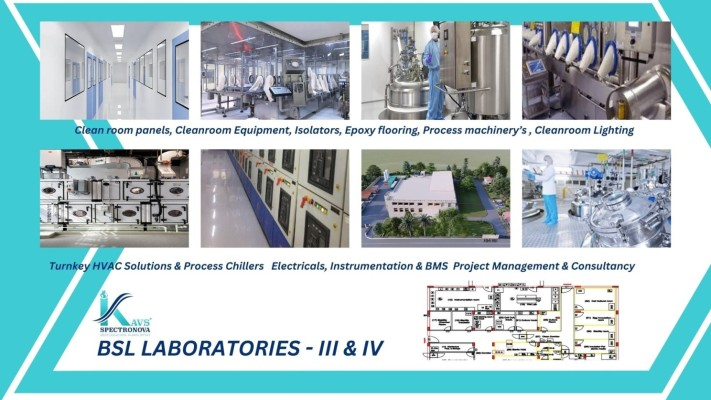
Key Features of BSL-3/BSL-4 Laboratories
- Negative Pressure Systems: Ensures that air flows into the lab, not out, preventing the escape of dangerous pathogens.
- Advanced Air Filtration: Utilizes HEPA filters and other filtration technologies to ensure air quality and prevent contamination.
- Strict Entry/Exit Protocols: Personnel must follow strict procedures, including wearing protective gear and undergoing decontamination, to minimize the risk of contamination.
- Waste Management Systems: Laboratories must have efficient waste disposal and treatment systems to safely manage biohazardous materials.
- Robust Containment Systems: Includes sealed lab doors, dedicated equipment, and double-door autoclaves to safely process infectious materials.
BSL Laboratories III & IV are essential for conducting research and testing with high-risk pathogens in a controlled and safe environment. By providing robust containment systems, advanced air filtration, and comprehensive waste management protocols, these laboratories play a vital role in the detection and analysis of deadly viruses, protecting both the personnel working in the labs and the environment.
At KAVS Spectronova Technologies Pvt. Ltd., we specialize in designing and constructing high-quality BSL Laboratories III & IV, tailored to meet both national and international standards. We understand the critical importance of biosafety and biosecurity, and our solutions are designed to ensure maximum protection while enabling cutting-edge research.
For more information on our BSL Laboratory Solutions, visit our website at SpectroKAVS and learn how we can help you build a safe, high-performance laboratory for advancing disease research and containment.
#KAVSSPECTRONOVATECHNOLOGIES #BSL3 #BSL4 #BioSafety #LaboratoryDesign #HealthSafety #MedicalResearch #ZoonoticDiseases #InfectiousDiseases #ContainmentLabs #WHO #USFDA #Biosecurity #LaboratorySafety #ResearchFacilities #PandemicPreparedness #ExhaustTreatment #LaboratorySolutions #SpectroKavs #CleanroomDesign
- Website
- About Us
- Services
- Careers
- Contact Us
- Clean Room Panels
- Stainless Steel Furniture
- Bsl Laboratories – Iii & Iv
- Unidirectional Air Flow
- Design & Consultancy
- Cleanroom Equipments
- Hvac Systems
- Osd-Granulation Machineries
- Injectable Line (Vial/Ampoule/Pfs)
- Process Solutions
- Modular Operation Theatre
- Project Management & Design Consultancy
- Isolation Technology
- Hospital – Healthcare Facilities
- Mobile Locker Compactor
- Projects
- Clients
- Business Associates
- Contact Us
BSL Laboratories III & IV: Ensuring Safety and Biosecurity in Disease Research 🧪
Biosafety level laboratories serve as critical defenses against deadly pathogens like Ebola, Nipah, and SARS. Understanding their design, standards, and operation is essential for researchers and facility managers working in high-containment environments.
1. Understanding Biosafety Levels & Their Importance
-
BSL‑3 labs handle pathogens that can cause serious, potentially fatal disease via inhalation. They require controlled access, directional airflow, sealed interiors, and HEPA filtration .
-
BSL‑4 labs deal with the most dangerous agents for which no vaccines or treatments exist. They incorporate all BSL‑3 features plus full-body positive-pressure suits, chemical showers, airtight airlocks, and dual HEPA filtered air systems .
-
Together, these high-containment disease research labs are vital for outbreak response, vaccine development, and public health.
2. BSL‑3 Laboratory Standards
a. Structural Design & Containment
-
Integrated within larger facilities, BSL‑3 labs are separated from normal areas by two self-closing doors and anteroom phe.gov+5OnePointe Solutions+5ehs.wvu.edu+5.
-
Walls, floors, ceilings are sealed and made from non-porous materials for easy decontamination Wired+15PMC+15vplcorp+15.
-
Ducting is single-pass; exhaust air is directed HEPA-filtered out of the building PMC+9PMC+9BioSafe Tech by QUALIA+9.
-
The lab must maintain negative directional airflow, monitored by sensors and automated alarms .
b. Equipment & Engineering Controls
-
Work with pathogens must be performed inside Class II or Class III biosafety cabinets (BSC) OnePointe Solutions+7ehs.wvu.edu+7Wikipedia+7.
-
Centrifuges require aerosol-tight rotors or be used inside a BSC ehs.wvu.edu.
-
Sinks and eyewash stations are hands-free and located near exits .
-
HVAC systems include interlocked supply/exhaust controls and alarms to prevent pressure reversal OnePointe Solutions+15PMC+15vplcorp+15.
c. Personnel Protection & Workflow
-
Lab personnel require autorisation, specific training, medical surveillance, and immune checks Wikipedia+15ehs.wvu.edu+15Wikipedia+15.
-
Protective wear includes solid-front gowns, two pairs of gloves, eye/face protection, and often Powered Air-Purifying Respirators (PAPRs) ehs.wvu.edu+1PMC+1.
-
Entry protocols involve donning PPE in an anteroom before entering the high-containment zone Wikipedia+15PMC+15ehs.wvu.edu+15.
-
Waste and equipment decontamination utilize autoclaves, chemical disinfectants, and sealed transfer chambers ehs.wvu.edu+8PMC+8vplcorp+8.
3. BSL‑4 Lab Design Requirements
a. Facility Layout & Containment
-
BSL‑4 labs reside in stand-alone buildings or fully isolated zones to ensure maximal control PMC+15BioSafe Tech by QUALIA+15vplcorp+15.
-
Entry and exit protocols include multiple airlocks, chemical showers, clean and dirty changerooms Wikipedia+3vplcorp+3BioSafe Tech by QUALIA+3.
-
Structural components (walls, ceilings, floors) are sealed to facilitate whole-room fumigation vplcorp.
b. Air Handling & Engineering Controls
-
Dedicated HVAC systems maintain negative pressure across zones, with triple or redundant HEPA filtration on exhaust air CDC+2hpac.com+2vplcorp+2.
-
Bioseal doors, bladder valves, and pressure-driven airflow ensure containment integrity hpac.com+1vplcorp+1.
-
Ducts are made of welded stainless steel and tested regularly for leaks .
c. Safety Systems & Redundancy
-
N+1 or greater redundancy provides backup for critical systems (fans, power, HVAC, wastewater) hpac.com.
-
Emergency power systems support life-support, ventilation, alarms, airlock systems, and biosafety cabinets hpac.com+1vplcorp+1.
-
Real-time monitoring with alarms for negative pressure, airflow loss, or system failures .
d. Personal Protective Equipment (PPE)
-
Positive-pressure personnel suits (PPPS) with HEPA-air supply are mandatory inside labs Wikipedia+6vplcorp+6Wikipedia+6.
-
Chemical showers disinfect suits before exit vplcorp.
-
All waste, including air and water effluent, is decontaminated via on-site kill tanks or double autoclaving Wikipedia+14hpac.com+14PMC+14.
4. Biocontainment Laboratory Setup Process
a. Early-Stage Planning
-
Risk assessment defines agent type, experiment methods, and outcomes that guide biocontainment laboratory setup planning.
-
Design incorporates containment needs, maintenance protocols, waste management routes, and safe material transfers.
b. Construction Standards
-
Smooth, seamless surfaces and hard-sealed furniture facilitate strict decontamination CDC+8kewaunee.in+8hpac.com+8ehs.wvu.edu+8vplcorp+8hpac.com+8.
-
Airlocks, showers, sealed interiors, and graded pressure zones are built to biosafety codes vplcorp+1PMC+1.
-
Selected materials must resist chemicals, heat, moisture, and physical wear.
c. Commissioning and Certification
-
Validation includes Installation Qualification (IQ), Operational Qualification (OQ), and Performance Qualification (PQ).
-
Systems undergo leak-pressure testing for airflow and containment integrity.
-
HEPA filters, airflow sensors, interlock mechanisms, and pressure systems are rigorously tested.
d. Operational Protocols
-
SOPs cover PPE use, airlock cycles, chemical shower usage, waste disposal, autoclave decontamination, and emergency procedures.
-
Staff training includes spill management, power failures, PPE donning/doffing, and emergency evacuation drills.
-
Routine audits and documentation ensure compliance and continuous improvement.
5. High-Containment Disease Research Labs
-
BSL‑3 and BSL‑4 labs are pivotal in studying diseases like TB, SARS-CoV-2, Ebola, Nipah, Marburg, and hemorrhagic fevers kewaunee.in+1vplcorp+1kewaunee.in+11Wikipedia+11Wired+11.
-
These labs support new drug and vaccine development and enable diagnostics through culture, challenge studies, and aerosol research.
-
They also facilitate public health monitoring during epidemics and biosecurity preparedness .
Example:
-
The ICAR‑NIHSAD in Bhopal is expanding from BSL‑3+ to full BSL‑4 status to manage threats like Nipah and CCHF Times of India.
-
The NBAF in Kansas incorporates seismic-resistant blast windows and tornado-resistant engineering—all while maintaining full containment Wired.
6. Operational Challenges & Best Practices
-
Power Outages: Backup generators and UPS systems are essential. A CDC lab incident showed how power loss compromises containment Wired.
-
Pressure Loss: Automated alarms and bladder valves must trigger immediate containment response.
-
Waste Management: Effluent kill tanks, chemical decontamination, and solid waste incineration protocols are vital.
-
Maintenance Access: Filter housings with bag-in/bag-out systems support safe servicing.
7. Future Trends in BSL Lab Design
-
Adoption of smart building tech, IoT sensors, and AI for real-time environmental control.
-
Integration of biocontainment workflows in modular, prefabricated lab units.
-
Emphasis on sustainable design—energy-efficient HVAC systems and eco-friendly construction materials.
-
Expanded training modules and virtual reality simulations for enhancing biosafety compliance.
8. The Critical Role of BSL Labs in Global Biosecurity
-
BSL‑3 and BSL‑4 labs empower nations to conduct safe infectious disease research—vital in an era of emerging pathogens.
-
Their presence supports global surveillance, vaccine distribution, and rapid response mechanisms.
-
Rigorous design, validation, maintenance, and well-trained personnel together ensure these high-containment disease research labs remain safe, efficient, and future-ready.
BSL LABORATORIES
BSL LABORATORIES
BSL LABORATORIES
BSL LABORATORIES
Table of Contents
Toggle