Ceiling Panels: Essential Solutions for Your Pharma Facility
At Kavs Spec Tech Pvt Ltd, we understand the critical importance of creating safe, sustainable, and efficient environments, especially in the pharmaceutical industry. That’s why we offer high-quality ceiling panels designed to meet the specific needs of your pharma facility, ensuring durability, flexibility, and top-notch performance.
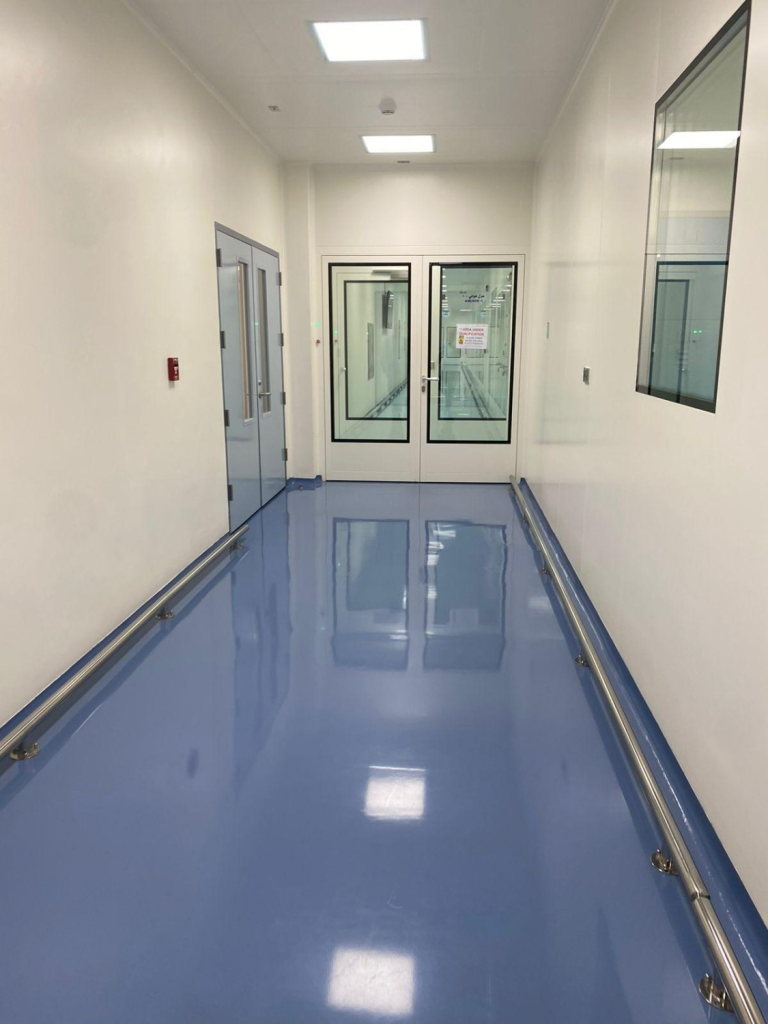
Our Ceiling Panels are available in two types: Walk-On and Non-Walk-On, providing flexibility depending on your facility requirements. Crafted from high-quality materials like powder-coated GI, pre-painted GI, and stainless steel sheets, these panels ensure long-lasting performance and a sleek appearance.
These panels are engineered with a specified infill thickness and feature peripheral G.I. profiles, ensuring both structural integrity and aesthetic appeal.
Key Specifications
-
-
- Panel Type: Plank-shaped, ranging from 1185 mm to 1200 mm in width, customized as per your layout needs.
- Skin Materials: PCGI / PPGI, Stainless Steel, and HPL (High-Pressure Laminate).
- Structural Framework: GI for metal panels and Aluminum for HPL, ensuring strength and durability.
- Thickness of Sheets: 0.6 mm to 0.8 mm for GI-based panels 3 mm and 4 mm for HPL
- Powder Coating Thickness: 60-80 microns, with pre-coating of 30-35 microns, ensuring a smooth and durable finish.
-
Insulation and Density
To meet the highest standards of energy efficiency, our ceiling panels come with various insulation options:
- PUF Insulation: Density of 40±2 kg/m³
- PIR Insulation: Density of 48±2 kg/m³
- Rockwool Insulation: Density of 96 kg/m³ & 144 kg/m³
These insulation materials contribute to thermal and acoustic performance, ensuring a comfortable and productive environment.
Design and Durability
- Sealant: We use food-grade silicone sealant on both sides of the panels, ensuring durability and hygiene, with a thickness of less than 4 mm.
- Dimensions: Standard panel width of 1200 mm with customizable height per your layout requirements.
- Panel Thickness: Available in 35 mm, 50 mm, 75 mm, and 80 mm, providing versatility for different installation needs.
- Load Carrying Capacity: 50 kg/m² UDL, making them highly suitable for pharmaceutical facilities and heavy-duty applications.
Colour and Customization
Our ceiling panels come in RAL 9001, 9002, and 9003 as standard colors, but we can provide any color from the RAL chart to match your aesthetic needs.
Innovative Features for Pharma Facilities
- Progressive and Non-Progressive Panel Types: Tailored to suit your specific requirements.
- Cutout Provision for HVAC: Customizable cutouts with C-type flashing and LIP type for easy HVAC integration.
- Hanging Arrangement: Panels are suspended with adjustable turnbuckles and anchor fasteners, ensuring secure and stable installation.
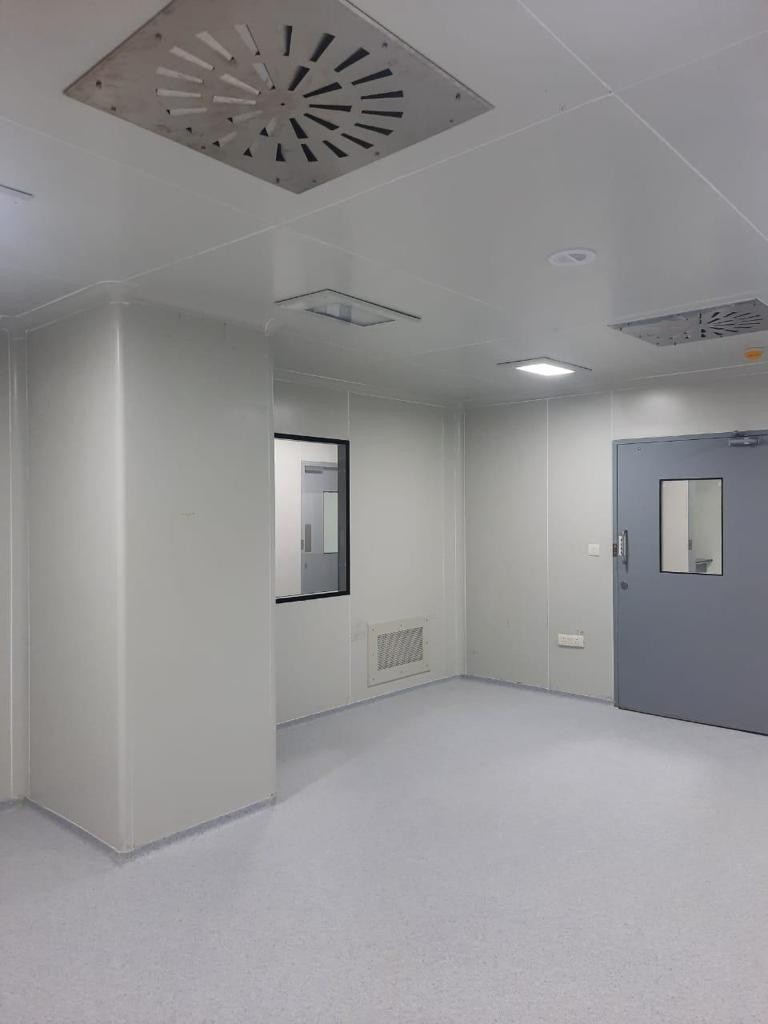
At Kavs Spec Tech Pvt Ltd, we are here to support you through every phase of your journey. From initial design to on-site implementation, and from technical development to production, we offer solutions that are customized to your specific needs.
We understand that setting up a pharma facility requires precision, and our ceiling panels are designed to meet the strict standards required in this industry.
Ready to elevate your pharma facility? Connect with us at spectrokavs.com to learn more and get started!
#PharmaFacility #CeilingPanels #ModularCeilingSystems #PharmaceuticalIndustry #FacilityDesign #ConstructionSolutions #SustainableBuilding #HVACSystems #InnovationInConstruction #IndustrialDesign #KavsSpecTech #QualityMaterials #PharmaceuticalManufacturing #BuildingSolutions #CleanroomDesign #TechnicalSolutions #EnergyEfficiency #Customization #BuildingInnovation #CeilingDesign #SuspendedCeiling #RockwoolInsulation #PrepaintedGI #StainlessSteelPanels #PharmaConstruction
- Website
- About Us
- Services
- Projects
- Careers
- Contact Us
- Clean Room Panels
- Stainless Steel Furniture
- Bsl Laboratories – III & IV
- Unidirectional Air Flow
- Design & Consultancy
- Cleanroom Equipments
- HVAC SYSTEMS
- OSD-GRANULATION MACHINERIES
- INJECTABLE LINE (VIAL/AMPOULE/PFS)
- PROCESS SOLUTIONS
- MODULAR OPERATION THEATRE
- PROJECT MANAGEMENT & DESIGN CONSULTANCY
- ISOLATION TECHNOLOGY
- HOSPITAL – HEALTHCARE FACILITIES
- MOBILE LOCKER COMPACTOR
- Clients
- Business Associates
The Ultimate Guide to Ceiling in High‑Sterility Facilities
When designing controlled environments like cleanrooms, pharmaceutical labs, or biotech suites, every element—from Spectronova cleanroom systems to Spectronova pharmaceutical equipment—plays a crucial role. Among these, Ceiling often go overlooked, yet they serve as the foundation of airflow, lighting, and contamination control. This comprehensive guide explores their importance, integration with KAVS lab automation solutions, and how they work harmoniously with facility-wide systems.
1. Why Ceiling Matter in Regulated Environments
Ceilings are more than just overhead structures—they’re key to:
Maintaining unidirectional airflow essential in ISO‑classified rooms
Enabling drop-in modules like HEPA filter housings
Supporting lighting fixtures, sensors, and sprinklers
Providing surface continuity for sterile cleaning processes
Poorly designed ceiling systems can compromise entire Spectronova cleanroom systems, leading to inefficiencies and compliance failures.
2. Integration with Spectronova Cleanroom Systems
Top-tier cleanrooms rely on seamless integration between structural components:
Modular ceiling grids allow flexible placement of Spectronova cleanroom systems controls and filters
Suspended panels match wall panels in finish and sanitary rating
Concealed cable channels above panels keep wiring hidden and dust-free
Compatibility ensures certified airflow performance, maintaining ISO and GMP compliance
Integration creates a cohesive environment optimized for predictable performance.
3. Compatibility with Spectronova Pharmaceutical Equipment
Labs often feature benches, hoods, and reactors under the ceiling grid:
Ceiling modules must support Spectronova pharmaceutical equipment lights, sensors, and extraction hoods
Adjustable panels accommodate repositioning during layout reconfigurations
Materials resist chemicals used during cleaning of Spectronova pharmaceutical equipment
Integration with ceiling systems helps preserve controlled room parameters
Well-orchestrated design ensures reliability and ease of maintenance.
4. Enhancing with KAVS Lab Automation Solutions
Automation systems from KAVS—like robotic arms and overhead conveyors—must integrate with ceiling infrastructure:
panels provide mounting options for overhead cable trays and air ducts
They support sensor arrays and safety interlocks for automated equipment
Ceiling-integrated junction boxes can reduce clutter and streamline layout
As labs evolve, this adaptability allows KAVS lab automation solutions to upgrade without costly ceiling modifications.
5. Technical Specifications for Ceiling
Key requirements include:
Load-bearing capacity for lights, sprinklers, sensors
Fire resistance – Class A2-rated ceilings are typical
Air-tightness tested to 0.05 m³/m² h at 50 Pa
Sustainable materials – low VOC, recyclable, durable
Hygienic, seamless surfaces coated with epoxy or antimicrobial finishes
These technical details support overall facility compliance and safety.
6. Cleanroom Classification & Ceiling Design
Different classes of clean rooms require tailored ceiling strategies:
ISO Class 5–6 (Grade B): High ceilings with HEPA modules, smooth joints, and laminar flow
ISO Class 7–8 (Grades C–D): Partial ceiling coverage with recirculating air, light fixtures, and sprinklers
Pharma-focused labs: Integration with air showers and negative-pressure zones
Certifying ceiling performance is as critical as validating walls, floors, and Spectronova cleanroom systems.
7. Maintenance & Cleaning Best Practices
Proper hygiene preserves ceiling functionality:
Regular wipe-down cycles with IPA or neutral detergents
Semi-annual ceiling power wash under maintenance hoods for Spectronova pharmaceutical equipment
Shared maintenance logs to track panel replacements, sealing repairs, and fixture checks
Coordination with automated equipment maintenance ensures ceiling integrity
Routine care protects both ceiling performance and the connected KAVS lab automation solutions.
8. Retrofit & Upgrade Considerations
Modernizing ceilings to accommodate new equipment requires:
Access panels sized to fit robotic overhead gantries
Integration of fixture relocations tied to Spectronova cleanroom systems upgrades
Coordinating with electrical and HVAC modifications above the grid
Ensuring downtime control to avoid disrupting Spectronova pharmaceutical equipment operations
Planning ahead makes these transitions smooth and cost-effective.
9. Cost and ROI Analysis
Upfront investment in high-quality ceilings supports:
Faster integration of new KAVS lab automation solutions
Lower maintenance costs through easy cleaning
Energy savings by improving airflow efficiency
Compliance benefits, avoiding expensive remediation
Increased productivity as setup times—and disruption—are minimized
Viewed holistically, advanced ceiling design is a smart long-term investment.
10. Compliance & Validation Protocols
To certify ceiling systems:
Conduct Aero particle smoke tests for laminar flow verification
Perform Air leakage tests using tracer gas or pressure techniques
Generate IQ/OQ documentation for ceiling grid integrity and fixture sealing
Maintain cleaning logs with frequency, methods, and disinfection records
Coordinate with full facility validation, including Spectronova cleanroom systems and KAVS automation readiness
Thorough validation ensures regulatory acceptance and operational integrity.
11. Real-Life Case Studies
A. Biotech R&D Lab
Installed ceiling replacement with integrated HEPA panels and robotic deployment mounts—boosted throughput by 30% while retaining ISO 5 certification.
B. Pharmaceutical Packaging Suite
Retrofit installed humidity-resistant ceiling to support packaging conveyors and Spectronova capping lines, reducing unit failures by 12%.
C. Vaccine Production Cleanroom
Full redesign optimized for Spectronova pharmaceutical equipment hoods with overhead guttering and in-ceiling UV fixtures—a validated drop-in system for rapid assembly.
12. Future Trends in Ceiling Design
Smart ceiling integrating occupancy sensors, HEPA filters with drop-in detectability
LED-lit ceilings with embedded UV-C sterilizers activating post-cleaning
Ceiling-integrated microclimate zones supporting variable HVAC per section
Use of 3D printing for customized, optimized panel geometries
These innovations sync ceiling function seamlessly with evolving Spectronova cleanroom systems.
13. Implementation Guide & Best Practices
Begin with room design and upfront layout planning
Map ceiling access points and load zones relative to KAVS lab automation solutions
Coordinate MEP trades for HVAC, sprinklers, and lighting early
Conduct airflow modeling and mockup tests before full ceilings
Run end-to-end commissioning across ceiling, equipment, and automation systems
A cohesive implementation plan ensures long-lasting integration success.
14. Key Takeaways
Ceiling systems are integral to cleanroom integrity, not afterthoughts
Must seamlessly integrate with Spectronova pharmaceutical equipment, Spectronova cleanroom systems, and KAVS lab automation solutions
Require careful design, validation, and maintenance to maintain performance
Investments in quality provide long-term gains in uptime, compliance, and scalability
15. Advanced Airflow Integration and Environmental Control
In sterile environments, overhead systems must deliver unidirectional airflow without compromising cleanliness. These grids are designed to support built-in filter housings, ensuring consistent low-particulate air movement. Integration with HVAC devices and sensor arrays enables real-time monitoring of temperature, humidity, and pressure differentials—critical for maintaining ISO-compliant zones.
These components also facilitate easy placement of LED lighting and sensor modules directly into the overhead structure, making routine inspections and maintenance efficient. During design and layout, coordination with engineers ensures smooth installation and accessibility without disrupting regulatory airflow patterns.
16. Structural Support for Overhead Automation
Leading-edge automated laboratories rely heavily on overhead frameworks. Wall-mounted gantries, robotic arms, and conveyors can be supported from above, provided the infrastructure is designed for adequate load distribution. Engineering teams apply finite-element analysis to determine weight limits, vibration tolerance, and anchorage points.
Load-rated panels and supports are installed to handle dynamic movement caused by mechanized arms and transport systems. These systems enable flexible deployment by providing pre-wired junctions, power, and compressed-air outlets at precise locations, reducing cable clutter at ground level and keeping sensitive modules clean and accessible.
17. Lighting, Sensors & Utilities Integration
Overhead modular systems allow seamless installation of:
Uniform LED lighting with high CRI, providing consistent illumination across benchtops and isolators
Airborne particulate sensors to identify potential contamination trends over critical zones
Smoke and leak detection devices, providing early alerts near airflow modules
Power and data conduits, hidden above, to serve ceiling-mounted equipment without visible wiring
This integrated infrastructure supports real-time environmental control and builds a clean, professional workspace.
18. Material and Finish Considerations
Surface materials must be:
Non-porous and smooth, to prevent microbial adhesion and ease cleaning
Chemical-resistant, to withstand regular exposure to disinfectants
Impact-resistant, to avoid dents or wear from routine maintenance
Surface-treated, offering antimicrobial action or reduced particulate shedding
Metal alloys like EN 316L offer optimal performance, but specialized coatings—such as powder coat or epoxy—can further enhance resistance to cleaning chemicals and wear.
19. Fire Safety & Class Ratings
Fire resistance is a top priority for all structural surfaces and supports:
Comply with Class A2 surface spread ratings or equivalent
Include smoke seals and intumescent materials around access panels and joints
Support fire suppression systems, with heads and piping integrated into the overhead structure
Maintain integrity under fire-drill conditions, without compromising airflow or containment
All components must be certified by recognized agencies—UL, FM, or EN standards—and validated during commissioning alongside HVAC and safety systems.
20. Acoustic Considerations
Overhead elements can carry sound, which may disturb sensitive investigations or affect communications. Selecting sound-dampening and insulated panels can reduce noise transmission from adjacent rooms or mechanical zones. Perforated materials or acoustic insulation layers minimize reverberation while maintaining airflow performance. In specialized labs—like preclinical animal facilities—these measures protect both research animals and personnel from unnecessary stress.
21. Vibration and Motion Dampening
In facilities with overhead movement—like robotic gantries or sliding service busses—it’s essential to dampen mechanical vibration. Precision lab modules benefit from:
Rubber or composite vibration dampers at attachment points
Anti-resonance mounts and tunable isolators
Structural bracing systems to stabilize moving installations and eliminate sway
These measures ensure sensitive analytical instruments maintain performance and calibration accuracy.
22. Retrofitting & Future-Proofing Design
Facilities frequently evolve to accommodate new equipment or protocols. A properly designed overhead structure supports easy upgrade workflows:
Pre-installed support studs and junctions match future equipment layouts
Modular framing and drop-in panels allow relocation of fixtures
Integrated plug-and-play electrics and data ports simplify retrofitting
Clear access routes and markings aid in safe modifications during audits or service
Modularity reduces downtime and ensures that lab upgrades don’t require full-scale infrastructure rebuilds.
23. Validation Protocols and Performance Monitoring
To certify environmental control, every overhead system must be validated alongside HVAC and cleanroom infrastructure:
Particle dispersion tests, including smoke or fog injection from access hatches
Pressure mapping across multiple zones to confirm airflow balance
Leak checks for all filter housings and modular penetrations
Illumination mapping, to verify uniform light intensity at workspace levels
Access verification, ensuring all panels permit ceiling-level equipment inspection or replacement
Regular re-validation—typically annual or semi-annual—is required to maintain certification.
24. Maintenance Hygiene and Cleaning Protocols
To preserve sterility and compliance:
Clean surfaces with industry-approved neutral detergent solutions, followed by purified water rinse
Schedule access-based cleaning—service hatches for sensors and ducts
Utilize microfiber or low-lint wipes to avoid particulate release
Track all cleaning activity in controlled logs, including agent type, date/time, and personnel initials
Plan periodic full overhead wash-down during annual shutdowns to remove dust and residue
These steps help maintain the integrity of all critical systems.
25. Lifecycle Management and End-of-Life Planning
All overhead infrastructure has a lifecycle. Best practices include:
Asset tagging and serial numbering for traceability
Inspection checklists, covering wear, corrosion, sealing, coating degradation
Preventive maintenance, including re-coating or resealing panels in place
End-of-life substitution planning—scheduled replacement to avoid failure in critical zones
Recycle directives, ensuring materials are disposed of or repurposed per sustainability goals
Proactive lifecycle management ensures long-term sterility and function.
26. Sustainability and Energy Efficiency
Well-designed overhead systems contribute to environmental responsibility:
Supporting efficient airflow systems reduces HVAC energy consumption
Recycled or low-VOC materials reduce environmental impact
Integrated LED lighting cuts power use compared to conventional fixtures
Reusable or recyclable panel materials minimize landfill waste
Monitoring electrical and HVAC consumption helps identify optimization opportunities
By building overhead structure into green certifications or energy audits, labs can improve their sustainability profile.
27. Collaborative Planning with Multi-Disciplinary Teams
Because overhead systems integrate multiple engineering disciplines (MEP, structural, automation), early planning is critical:
Stakeholder Considerations
Lab Managers Workflow layout, future equipment plans
Engineers Load and airflow specs, installation access
Automation Teams Support for gantries, detection systems
Validation Specialists Compliance requirements and maintenance
Maintenance Crews Accessibility, inspection frequency
By integrating all these voices early on, labs avoid costly retrofits or compliance issues later.
28. Innovation Spotlight: Smart Integrated Design
Cutting-edge developments include:
Sensor-integrated tiles for environmental monitoring
Overhead surge lighting that auto-adjusts based on time or presence
Clip-in sensor housings for rapid retrofit or removal
Embedded back-channels for air, power, data, and compressed air in a unified overhead duct
Smart identification chips in fixtures for asset management and tracking
These innovations align with Industry 4.0 goals—making labs more intelligent, intuitive, and efficient.
29. Recommendations and Best Practices
Start overhead design alongside floors and walls for unified control
Pre-map access points and load capacity before adding robotics
Choose materials based on lifecycle, finish, and cleaning agents
Build in modularity to facilitate future expansion
Document all components, cleaning protocols, and change events in a centralized system
With well-planned overhead structure, labs gain agility, compliance, automation support, and lasting operational excellence.
Table of Contents
Toggle