
Cleanroom Equipments
Precision-engineered equipment designed to maintain strict contamination control, enhance operational efficiency, and ensure regulatory compliance in controlled environments.
Cleanroom Equipments
STATIC PASSBOX
Static Pass Box is usually in transfer between the same Classified Room.
This Pass box is Two type – wall Mounted (Where Material Sizes Are
Small,E.g-Sachet,Pouch etc ) Another is Floor Mounted (Where Trolley
Movement is there.)
Heart of System:
- MOC–SS 304 /316
- Thickness – As per the Requirement .
- SS 304 Double wall ConstrucQon,SS Hinges,SS Handle,Double Glaze View Panel.
- Electro-Magnet Interlock- which ensure one Door will open at a Qme.
- LED Light–Min 250 Lux
- U.V Light–Germicidal UV Light (Wavelength-280-100nm)
- Micro Processor – Unit Will run through Microprocessor Password Based System And Having the ProtecQon Standards IP 65.Also Feature with Door Lock, Unlock, Light on-off.
- Power Supply-230V AC, 1Ø, 50hz
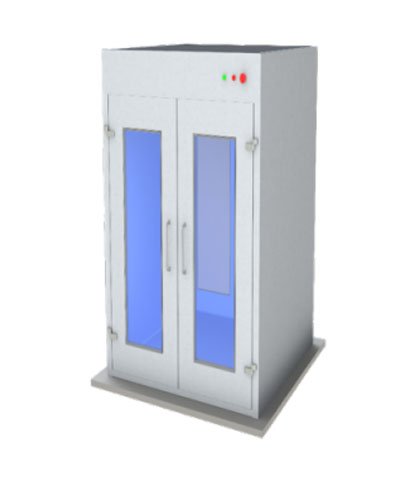
DYNAMIC PASSBOX

Dynamic Pass box is usually in transfer between the different Classified
Room. This Pass box is Two type – wall Mounted (Where Material Sizes Are
Small,E.g- Sachet,Pouch etc ) another is Floor Mounted (Where Trolley
Movement is there.)
Heart of System
- MOC–SS 304 /316
- Thickness–As per the Requirement .
- SS 304 Double wall ConstrucQon, SS Hinges, SS Handle, Double Glaze
View Panel - Electro-Magnet Interlock-which ensure one Door will open at a Qme.
- Motor Blower–Kruger, ROSENBERG AC/EC, Dynamic
- HEPA–Gasket Type, GEL Seal Filter.
- PAO–PAO at Upstream HEPA Filter .
- Pressure Gauge–Analog/Digital
- Air Flow–VerQcal Re-circulatory, 0.45m/s, Cleaniness-ISO-5.
- U.V Light–Germicidal UV Light (Wavelength-280-100nm).
- Micro Processor–Unit Will run through Microprocessor Password Based
System And Having the Protection Standards IP 65.Also Feature with
Door Lock, Unlock, Light on-off - Pressure Gauge–Analog/Digital
LAMINAR AIR FLOW UNIT- CEILING MOUNTED /STAND
Vertical Laminar Flow unit is used to be achieved with cleanliness Level ISO-5 in Work StaQon to Prevent the Product. It can be Suspended from Ceiling / Mounted on Stand, Depends on User Requirements.
Heart of System
- MOC–SS 304 /316
- SS 304 Double wall Construction
- Motor Blower–Kruger, ROSENBERG AC/EC, Dynamic.
- HEPA–Gasket Type, GEL Seal Filter .
- PAO–PAO at Upstream HEPA Filter.
- Pressure Gauge–Analog/Digital.
- Air Flow–Vertical, 0.45 m/s, Cleaniness-ISO-5
- Micro Processor – Unit Will run through Microprocessor Password Based System And Having the Protection Standards IP 65

SAMPLING/DISPENSING BOOTH
Downward Forced air of sampling booth extracts at low level into the
booths cleanliness filtration system where contaminated particles
recirculated into the booth Air Flow. In standard Working condiQon of
Pharmaceutical dispensing booth air pulled through the main chamber
to steel exhaust grills used to fasten the HEPA & PRE-filters fitted in the
rear side of the booths, It suppresses airborne dust parQcles away from
the uses breathing area.
Heart of System
- This System Comprises With 3 Stage Filtration System–Pre Filter, Intermediate Filter & HEPA Filter .
- Motor Blower–Kruger, ROSENBERG AC/EC, Dynamic
- HEPA–Gasket Type, GEL Seal Filter.
- PAO–PAO at Upstream HEPA Filter .
- Pressure Gauge–Analog/Digital
- Pressure Gauge–Analog/Digital.
- Air Flow–Vertical, 0.45 m/s, Cleaniness-ISO-5
- Micro Processor – Unit Will run through Microprocessor Password Based System And Having the Protection Standards IP 65

DISPENSING BOOTH


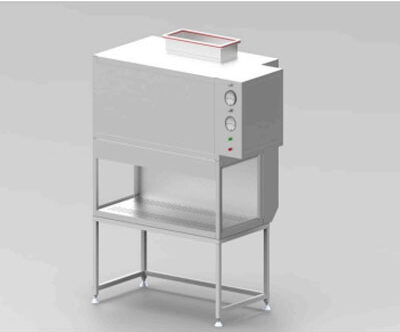
BIOSAFETY CABINET
A biosafety cabinet (BSC)—also called a biological safety cabinet or microbiological safety cabinet—is an enclosed, ventilated laboratory workspace for safely working with materials contaminated with (or potenQally contaminated with) pathogens requiring a defined biosafety level. Several different types of BSC exist, differentiated by the degree of bio-containment required.
Type:Biosafety cabinets are classified into three classes by the U.S. Centres for Disease Control and Prevention (CDC) as per specific Application
- Class I – Recirculation,cabinets protect the operator and the environment from the aerosol but not the sample .
- Class II – A2 & B2 (A2- 70% Recirculation & 30 % Exhaust, B2- 100% Exhaust.)Cabinets provide both kinds of protecQon (of the samples and the environment) since makeup air is also HEPA-filtered.
- Class III – 100% Exhaust, Also these is known as Glove Boxes,These BSC can be used for BSC Level 1-4, These are Most important for the manipulation Biological Material in the BSL -4.
- Note:Exhaust FiltraQon will come with Double HEPA Combination.
AIR SHOWER
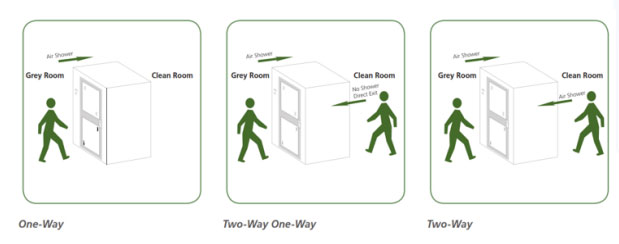
Air Showers are self contained chambers installed at entrances to cleanrooms and other controlled environments. They minimize particulate matter entering or exiting the clean space. Personnel and materials entering or exiting the controlled environment are “scrubbed” by high velocity HEPA filtered air jets with velociQes of 20-22m/s (4000-4300fpm). Contaminated air is then drawn through the base within the unit, filtered and recirculated. This unit can be Served in industries of micro-electronics, semiconductors, pharmaceutical, spray painting, laboratory animal research and food market

MIST SHOWER
Mist Shower is a chamber installed at exit of clean room where Hazardous Product like Onco Drugs, Hormonal injectables, Sterile products and likewise. It is designed to provide protecQon during degowning process while exiting the area.
Air actuated mist showers using ultrasonic nozzles are required for making mist shower .The purpose of mist shower is to make powder sQck to the clean room dress of the person coming out of the manufacturing facilities like API / Oncology manufacturing units . The loose powder sivng on the dress of the person should not contaminate the air when the person coming out . The powder is made sQck to the dress by using water based mist and the precauQon need to be taken that the water should not drip . It is because of this reason the ultrasonic mist nozzles are required . The mist shower is equipped with dry zone where the person moves to the next compartment and remove his or her clear room gowns and throws it in a v accumized fully sealed incinerator . One person entry is only allowed at a time. DI water with HEPA air atomization is done using ultrasonic mist nozzles . Drip tank is fitted on the floor .

DEDUSTING BOOTH
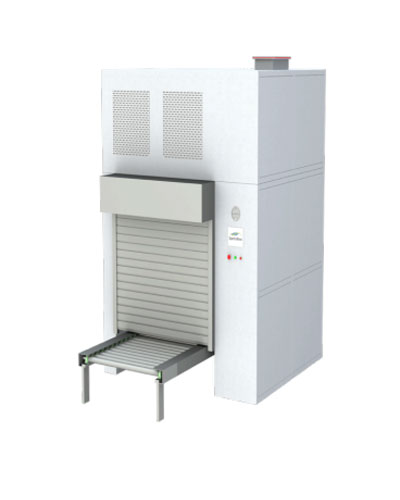
Arrest dust at source with De-dusting Tunnel. Reduce dust levels, improve product quality and yield. Our De-dusting Tunnels remove loose particles and dust that accumulate on raw material containers including drums, cartons and bags prior to sampling. ParQcles are collected in a tray, and the filtraQon system picks up airborne particulates. 21CFR and GMP compliant, automated, mechanized system. Delivers consistent performance.
Heart of System
- Basic cabinet (SS304/CRCA powder coated/double wall PUFF filled panel)
- Single-pass fully automated system with PVC Shu]ers (entrance and exit) with endless conveyor with rotary moving brush in X -Y axis.
- High-velocity Jet System (8000 fpm – 10000 fpm) with manually adjustable Flow Control.
- PLC/Manual Control system with differenQal pressure gauges .
- LED concealed light providing light intensity in excess of 400 LuX.
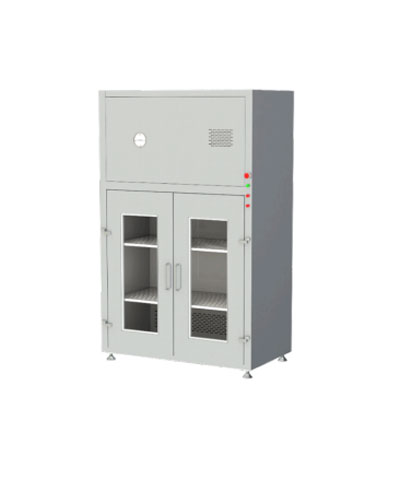
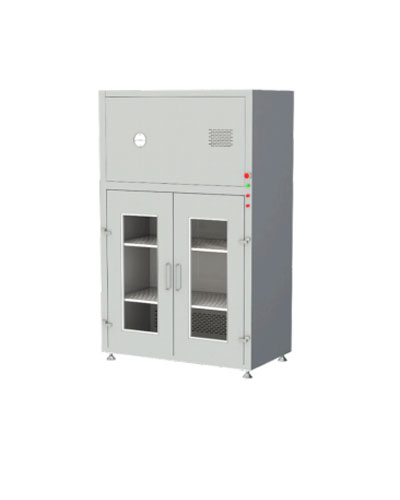
DYNAMIC GARMENT STORAGE CABINET
Cleanroom garments can accumulate contaminaQon during storage and between laundry washes, which in turn may lead to lower product yields and increased product quality issues . The enhanced filtraQon system on the garment storage cabinet is designed to provide the highest level of air quality within the work zone, meeQng all relevant standards.
Heart of System
- MOC – SS 304 /316
- Motor Blower–Kruger, EBM AC/EC, Dynamic
- HEPA–Gasket Type, GEL Seal Filter .
- PAO–PAO at Upstream HEPA Filter
- Pressure Gauge–Analog/Digital
- Air Flow–VerQcal Re-circulatory, 0.45 m/s, Cleaniness-ISO-5
- U.V Light–Germicidal UV Light (Wavelength-280-100nm)
- Micro Processor–Unit Will run through Microprocessor Password Based System And Having the ProtecQon Standards IP 65 .Also Feature with Door Lock, Unlock, Light on-off .
- Heater Along with Thermostat.
Technical Details of HPL
High Pressure Laminate
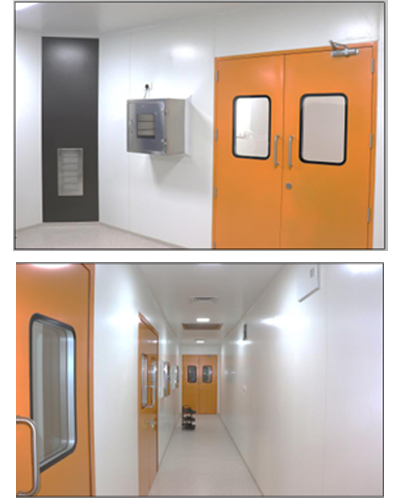
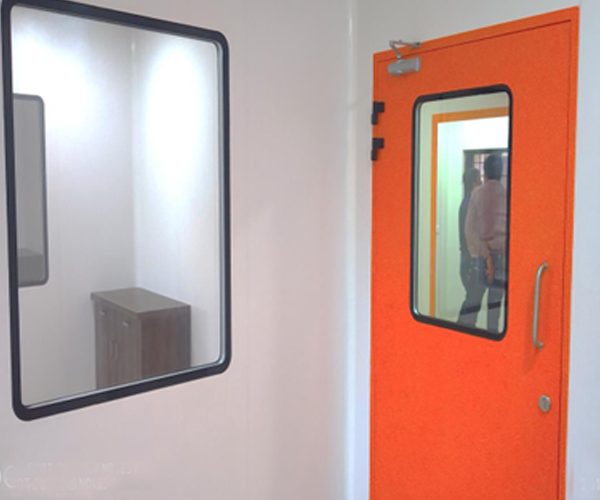
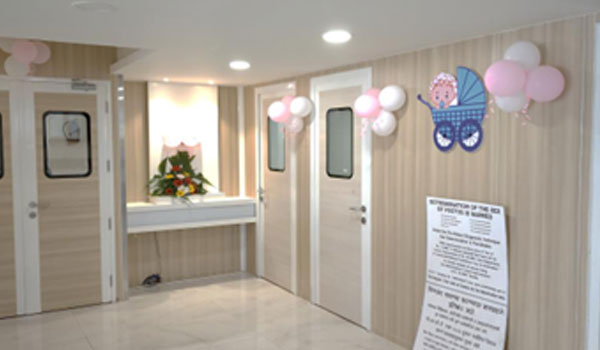
High Pressure Laminate is considered to be one of the most durable decorative surface materials and is available with special performance properties including chemical, fire and water resistance
HPL panels are manufactured on CNC Machinery by our skilled professional team.
Advantages:
- Available in different colours.
- Anti Fungal / Anti Bacterial
- Easy to Clean
- Long Lasting
- Easy to Relocate
- Resistant to Scratch
- Ability to carry concealed services and Return air ducts/risers
HPL in Cleanroom ?
The HPL surfaces are distinguished by some highly technical features, namely:
High mechanical resistance to impact, total resistance to water, chemical detergents, steam, impact and highly resistant to abrasion. Over 40 layers of kraft impregnated with melamine and phenolic resin. The 3 mm thick HPL panel has a transparent finish on both external sides that protects the decorative layer below. Solid, structured, unpainted material (the colour is part of the material). Antistatic and antibacterial given the nature of the product itself, HPL is used extensively in controlled contamination environments. The central dark brown layer consists of a series of kraft papers impregnated with phenolic resins, pressed to 9 MPa at 150°C. A protective PVC coating protects the panel during the production, transportation and installation phases. We chose to use HPL-grade products only when realising our cleanrooms, in accordance with standard EN438.
Insulation
ROCKWOOL
Sheets of fireproof rock wool oriented perpendicular to the plane. Density 100 Kg/cbm, fire reaction class A1 (EN 13501-1) declared thermal conductivity (λ) = 0.037 W/mK (EN 12667 or 14303)
POLYURETHANE [ PU ]
Infil of injectable expanded polyurethane. Density 42 – 45 Kg/cbm, fire reaction class B3(EN 13501-1 or DIN 4102) declared thermal conductivity (λ) = 0.022 W/mK (EN 12667)

Technical data on the external layer in HPL
| Thickness | 3 mm |
|---|---|
| Modular panel dimensions | 1300 x h3050 mm |
| Scratch and impact resistance (1-10) | 9 |
| Steam and water resistance (1-10) | 9 |
| Antistatic property (1-10) | 10 |
| Hygienic and easy to clean (1-10) | 10 |
| Humidity resistance: RH 25% – 100% (1-10) | 10 |
| Humidity resistance: RH 0% – 25% (1-10) | 5 |
| Fire resistance class | B-S1-D0 (EN 13501-1) FIREPROOF D-S2-D0 (EN 13501-1) STANDARD |
| PVC external protective film | Yes |
| Colour | 18 shades |
Factory direct cleanroom equipment includes Airshowers, Pass- Thrus, Laminar Flow Work Stations, Fume Hoods, Clean Room Light Fixtures, HEPA Filters, Replacement HEPA Filters, Ionizing equipment, and Soft Wall enclosures.
Everything You Need to Know About Cleanroom Equipments and Packages
Introduction
Cleanrooms are essential environments for industries requiring strict contamination control, such as pharmaceuticals, electronics, biotechnology, and aerospace. The efficiency and compliance of these environments depend heavily on the right selection of cleanroom equipments. Whether you’re designing a new facility or upgrading an existing one, understanding the scope and importance of cleanroom equipment packages is vital. This guide covers all the essential aspects—from modular cleanroom equipment solutions to GMP cleanroom equipment and integrated cleanroom furniture and equipment packages.
1. Understanding Cleanroom Equipments
Cleanroom equipments refer to specialized tools and systems designed to maintain strict environmental controls, such as temperature, humidity, air purity, and pressure. These equipments help eliminate contaminants like dust, airborne microbes, and aerosol particles.
Common types of cleanroom equipments include:
HEPA and ULPA Filters: These filters are crucial for maintaining particulate-free air.
Air Showers: These remove loose particles from personnel and materials before entering the clean zone.
Pass Boxes: These allow safe transfer of materials between clean and non-clean zones.
Laminar Air Flow Units: Ensure uniform air flow and minimize cross-contamination.
Cleanroom Furniture: Includes stainless steel tables, storage cabinets, trolleys, and chairs that meet cleanroom standards.
Choosing the right cleanroom equipments is the first step in achieving regulatory compliance and maintaining product integrity.
2. The Importance of Cleanroom Equipment Packages
Purchasing individual equipment pieces can be time-consuming and inconsistent. That’s where cleanroom equipment packages come into play. These packages are pre-bundled solutions that offer:
Compatibility among equipment
Ease of installation
Faster deployment
Cost efficiency
Regulatory compliance
Cleanroom equipment packages are designed to serve specific industry needs, ensuring that each component meets ISO and GMP standards. From cleanroom benches and pass boxes to advanced HVAC systems and cleanroom consumables, these packages offer a complete turnkey solution.
3. Modular Cleanroom Equipment Solutions
The rise of modular cleanroom equipment solutions is transforming how cleanrooms are built and maintained. Modular systems offer flexibility, scalability, and quicker deployment.
Advantages of modular cleanroom equipment solutions:
Customizable Designs: Modular systems can be adapted for specific applications and spaces.
Scalability: You can expand or modify the cleanroom easily as your needs evolve.
Faster Installation: Modular components reduce construction time.
Portability: Ideal for temporary setups or when relocating operations.
These modular cleanroom equipment solutions are ideal for companies looking to scale up production or meet temporary high-volume demands.
4. What is GMP Cleanroom Equipment?
GMP cleanroom equipment refers to tools and systems that comply with Good Manufacturing Practices. These are mandatory in pharmaceutical and biotech industries to ensure product safety and quality.
Features of GMP cleanroom equipment:
Made from non-shedding, corrosion-resistant materials like stainless steel.
Easy to clean and sterilize.
Compliant with international standards such as EU GMP, WHO GMP, and cGMP.
Designed to eliminate dust accumulation and microbial growth.
Typical GMP cleanroom equipment includes air handling units, cleanroom storage solutions, gowning benches, biosafety cabinets, and cleanroom HVAC systems.
Choosing GMP cleanroom equipment ensures you meet regulatory requirements and maintain operational efficiency.
5. Cleanroom Furniture and Equipment Packages
An often-overlooked but essential aspect of cleanroom setup is the furniture. Cleanroom furniture and equipment packages include a combination of equipment and furnishings designed to ensure seamless operations.
What’s included in cleanroom furniture and equipment packages:
Workbenches and Tables (SS 304/316 grade)
Gowning Room Furniture
Cleanroom Storage Cabinets
Instrument Tables
Trolleys and Carts
Step Ladders and Chairs
These cleanroom furniture and equipment packages are usually bundled according to cleanroom class (ISO 5, 6, 7, 8) and industry type (pharma, electronics, etc.), helping you save time and stay compliant.
6. Choosing the Right Cleanroom Equipment Supplier
When selecting a supplier for your cleanroom equipments, keep these factors in mind:
Industry experience and credibility
Customization options
Certifications (ISO, CE, GMP)
Installation and support services
Post-sale maintenance
A reputable supplier will not only provide top-grade cleanroom equipment packages, but also assist with layout design, installation, validation, and maintenance.
7. Cleanroom Equipment Compliance and Validation
Your cleanroom equipments must be validated regularly to maintain compliance. Validation includes:
Airflow and particle count tests
HEPA filter integrity testing
Pressure differential monitoring
Equipment sterilization validation
Especially in GMP environments, GMP cleanroom equipment should come with documentation for Installation Qualification (IQ), Operational Qualification (OQ), and Performance Qualification (PQ).
8. Industry Applications of Cleanroom Equipment Packages
Cleanroom equipment packages are widely used in:
Pharmaceutical Manufacturing: To ensure sterile environments for drug production.
Biotechnology Labs: For genetic research and cell culture.
Semiconductor Manufacturing: Where even a speck of dust can damage microchips.
Hospitals and Labs: For infection control and precision testing.
Food and Beverage Processing: For hygiene and contamination control.
Each industry benefits from tailored modular cleanroom equipment solutions that meet their specific regulatory and operational needs.
Conclusion
Investing in the right cleanroom equipments is crucial for maintaining a controlled environment and meeting industry regulations. Whether you’re building a new cleanroom or upgrading an existing one, consider the benefits of integrated cleanroom equipment packages, opt for modular cleanroom equipment solutions, and ensure all components are GMP cleanroom equipment. Don’t overlook the value of cleanroom furniture and equipment packages, which complete the ecosystem of a fully functional cleanroom.
Choose a trusted supplier and prioritize compliance, quality, and efficiency in your cleanroom setup.
For expert guidance and custom packages, call us at +91 9967436808 today!
Cleanroom Equipment: Essential Solutions for GMP Compliance and Operational Excellence
Cleanrooms are critical environments designed to maintain controlled levels of contamination, essential for industries like pharmaceuticals, biotechnology, medical devices, and electronics manufacturing. The backbone of these sterile and controlled spaces is high-quality cleanroom equipment that meets stringent standards to ensure product integrity and personnel safety.
In this blog post, we will explore the importance of cleanroom equipment packages, delve into modular cleanroom equipment solutions, discuss the benefits of GMP cleanroom equipment, and highlight the value of comprehensive cleanroom furniture and equipment packages.
What is Cleanroom Equipment?
Cleanroom equipment encompasses all specialized tools, furniture, and systems designed for use within cleanroom environments. This includes items such as:
Workbenches and tables
Storage cabinets and shelving
Laminar flow units and biosafety cabinets
Pass-through chambers and air showers
Flooring and wall panels designed for hygiene
Lighting and HVAC integration components
All these components work together to create a contamination-controlled environment by minimizing particulate generation and facilitating rigorous cleaning protocols.
Importance of Cleanroom Equipment Packages
Rather than sourcing individual items, many organizations opt for cleanroom equipment packages—comprehensive sets of equipment and furniture that are designed to work seamlessly together. These packages provide several advantages:
1. Streamlined Procurement and Installation
Selecting a pre-designed equipment package simplifies the purchasing process. Vendors provide coordinated solutions where each component complements the others, reducing compatibility issues and accelerating installation timelines.
2. Optimized Layout and Workflow
Equipment packages are often designed based on best practices in cleanroom workflows. This optimization helps reduce cross-contamination risks and improves operational efficiency.
3. Cost Efficiency
Bundling furniture and equipment together often results in better pricing compared to purchasing items separately, reducing overall project costs.
4. Regulatory Compliance
Packages from reputable suppliers typically meet GMP cleanroom equipment standards, ensuring your facility adheres to FDA, EMA, and ISO guidelines.
Modular Cleanroom Equipment Solutions: Flexibility Meets Performance
The pharmaceutical and biotech industries are rapidly evolving, requiring facilities to adapt quickly to new processes and regulations. This is where modular cleanroom equipment solutions come into play.
What Are Modular Solutions?
Modular equipment and furniture are designed to be flexible, scalable, and easy to reconfigure. For example, modular workbenches can be assembled or expanded according to the current workflow, while modular storage units can be relocated as needed.
Benefits of Modular Cleanroom Equipment
Scalability: Easily expand or downsize your cleanroom setup without major overhauls.
Customization: Tailor the equipment to meet specific process needs.
Reduced Downtime: Reconfiguring modular systems is faster than traditional renovations, minimizing operational disruptions.
Sustainability: Modular components can often be reused or repurposed, reducing waste.
These flexible solutions ensure that cleanroom facilities remain future-proof and cost-effective.
The Role of GMP Cleanroom Equipment
Good Manufacturing Practices (GMP) are regulatory guidelines that ensure products are consistently produced and controlled according to quality standards. Using GMP cleanroom equipment is critical in pharmaceutical and biotech environments to achieve compliance.
Characteristics of GMP Cleanroom Equipment
Material Quality: Typically made from pharmaceutical-grade stainless steel or other non-porous, corrosion-resistant materials.
Cleanability: Designed with smooth surfaces, rounded edges, and minimal joints to prevent microbial harboring and allow thorough cleaning.
Validation and Documentation: Equipment must come with certification and validation documentation to support audit processes.
Durability: Robust construction to withstand frequent cleaning with harsh disinfectants without degradation.
Investing in GMP-compliant equipment safeguards your manufacturing processes from contamination risks and regulatory non-compliance.
Comprehensive Cleanroom Furniture and Equipment Packages
To build or upgrade a cleanroom facility efficiently, it’s essential to consider comprehensive cleanroom furniture and equipment packages. These all-inclusive offerings typically include everything from basic workstations to specialized equipment, ensuring a turnkey solution.
What’s Included?
Workbenches and lab tables with adjustable heights
Storage cabinets with secure, dust-proof doors
Laminar flow cabinets and biosafety hoods for aseptic processing
Pass-through chambers to reduce contamination risks during material transfer
Cleanroom lighting designed to minimize particle generation
Flooring and wall panels compatible with cleanroom hygiene protocols
Advantages of All-In-One Packages
Consistency: Uniform design and materials improve cleanability and aesthetics.
Ease of Validation: Pre-certified equipment simplifies the validation and qualification process.
Project Management: Single-vendor sourcing reduces coordination efforts and accelerates project completion.
Warranty and Support: Comprehensive packages often include maintenance contracts and post-installation support.
Choosing the Right Cleanroom Equipment Partner
Selecting the right supplier for your cleanroom equipment is critical to ensure quality, compliance, and after-sales support.
Factors to Consider
Experience in your specific industry sector
Ability to customize solutions based on your cleanroom classification and workflow
Compliance with relevant standards (ISO 14644, GMP, FDA)
Availability of installation, validation, and maintenance services
Strong references and proven track record
Conclusion
High-quality cleanroom equipment is indispensable for creating and maintaining contamination-controlled environments in pharmaceutical, biotech, and other critical industries. Whether you opt for cleanroom equipment packages, modular cleanroom equipment solutions, or invest in GMP cleanroom equipment, ensuring compatibility, compliance, and cleanability are vital.
Comprehensive cleanroom furniture and equipment packages offer a practical and efficient way to equip your facility with all the essentials while streamlining procurement and installation.
By choosing the right equipment and trusted suppliers, you can achieve operational excellence, maintain stringent regulatory compliance, and protect product and personnel safety.
Ready to upgrade your cleanroom with the best equipment and furniture packages? Contact us today to explore tailored cleanroom solutions that fit your needs and budget.
Table of Contents
Toggle