7 Best Practices for HVAC Systems in Pharmaceutical Facilities
Ensuring contamination-free environments with precise airflow control for cleanroom and high-grade sterile applications.
What is Unidirectional Air Flow
7 Best Practices for HVAC Systems in Pharmaceutical Facilities
When a Unidirectional Air Flow (UDAF) system is connected to an Air Handling Unit (AHU) and used as a single pass-through system, it typically refers to a setup commonly found in controlled environments such as cleanrooms, laboratories, or certain manufacturing injectable aseptic filling processes
Heating, Ventilation, and Air Conditioning (HVAC) systems form the backbone of pharmaceutical facilities. They are responsible for controlling temperature, humidity, pressure differentials, and air cleanliness to ensure that manufacturing processes meet the highest standards of Good Manufacturing Practices (GMP), World Health Organization (WHO) guidelines, and regulatory requirements from bodies such as the US FDA and EMA.
Unlike conventional HVAC applications in offices or commercial buildings, HVAC systems in pharmaceutical facilities have a far more critical role. They are directly linked to product safety, contamination control, and regulatory compliance. A poorly designed or inefficient system can compromise product quality, lead to regulatory non-compliance, and escalate operational costs.
At KAVS Spectronova Technologies Pvt Ltd, we have years of experience designing, engineering, and executing HVAC systems for cleanrooms, laboratories, and pharmaceutical production plants. Based on industry expertise, here are the 7 Best Practices for HVAC Systems in Pharmaceutical Facilities.
Design HVAC Systems Based on Cleanroom Classification
Cleanrooms in pharmaceutical facilities are categorized according to international standards like ISO 14644-1, EU GMP Grades (A–D), and US FDA guidelines. Each class defines acceptable limits of airborne particulate matter, microbial contamination, and airflow velocities.
Engineering Considerations:
Air Change Rates (ACH): The number of times air is replaced per hour is determined by the cleanroom grade. For example:
- Grade A/B: 240–360 ACH
- Grade C: 30–60 ACH
- Grade D: 20–30 ACH
Implement Zonal Segregation and Pressure Cascading
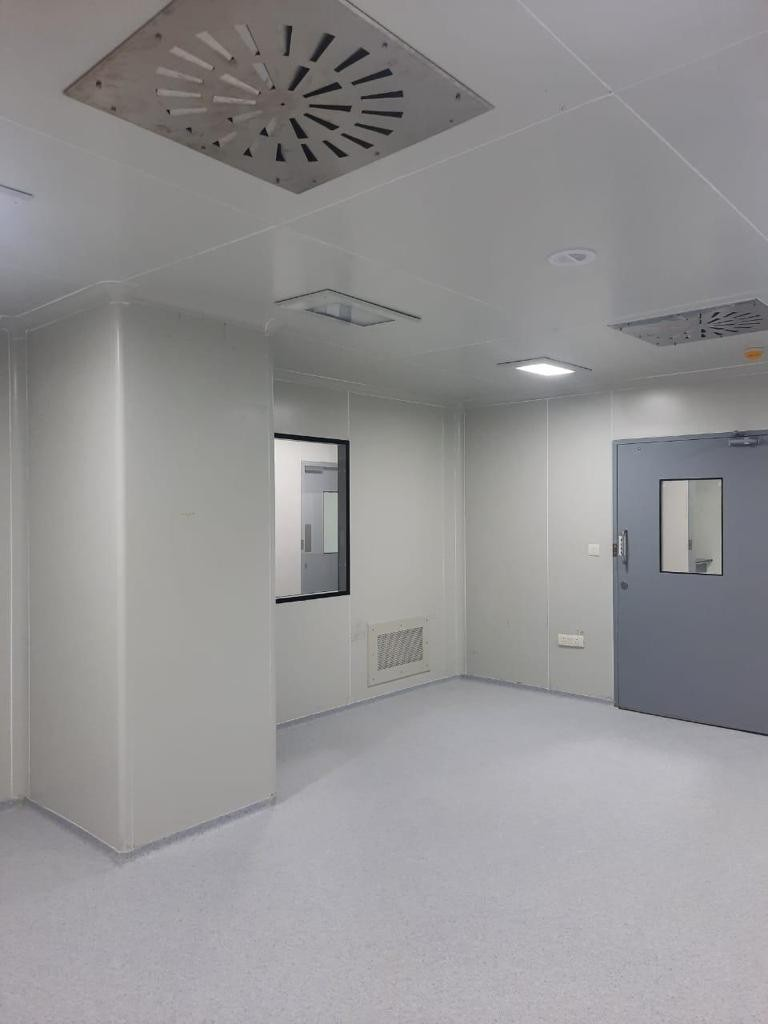
HVAC systems in pharmaceutical plants must establish clear zonal segregation to ensure that contaminants flow away from critical areas.
Best Practices:
Air Change Rates (ACH): The number of times air is replaced per hour is determined by the cleanroom grade. For example:
- Positive Pressure Areas: Maintain positive pressure in sterile zones so air leaks outward, preventing contaminants from entering.
- Negative Pressure Areas: For potent or toxic products, negative pressure is required to contain hazardous substances.
- Airlocks and SAS (Sterile Access Systems): Ensure proper pressure differentials in personnel airlocks (PALs) and material airlocks (MALs).
- Monitoring Devices: Install differential pressure gauges or Magnehelic gauges at entry/exit points.
KAVS Tip: During design, carefully calculate supply air volumes, exhaust rates, and leakage compensation to achieve stable pressure cascades. Even small imbalances can destabilize the cleanroom environment.
Ensure Robust Filtration and Airflow Management
Air filtration is at the core of pharmaceutical HVAC systems. A well-designed filtration system ensures contamination control and regulatory compliance.
Filtration Best Practices:
Air Change Rates (ACH): The number of times air is replaced per hour is determined by the cleanroom grade. For example:
- Pre-Filters and Fine Filters: Install multi-stage filtration to extend HEPA filter life.
- HEPA/ULPA Filter Integrity Testing: Conduct DOP/PAO tests to verify filter performance annually.
- Laminar Airflow Units (LAFs): Use vertical or horizontal LAFs in aseptic zones to deliver first air to critical operations.
- Return Air Duct Placement: Position return ducts at low levels in cleanrooms to aid particle removal.
KAVS Tip: During design, carefully calculate supply air volumes, exhaust rates, and leakage compensation to achieve stable pressure cascades. Even small imbalances can destabilize the cleanroom environment.
Optimize Energy Efficiency Without Compromising Compliance
Pharma HVAC systems typically consume 40–60% of a facility’s total energy. Optimizing energy use is critical for reducing operational costs while maintaining GMP compliance.
Energy-Efficient Strategies:
- Variable Air Volume (VAV) Systems: Adjust airflow dynamically based on occupancy or production load.
- Heat Recovery Systems: Use energy recovery wheels or plate heat exchangers to reuse conditioned air energy.
- Efficient Chillers and AHUs: Select high-efficiency chillers, pumps, and air handling units with proper insulation.
- Night/Idle Mode Operation: Lower air change rates during non-production hours while maintaining minimum GMP requirements.
KAVS Tip: Use Computational Fluid Dynamics (CFD) modeling to simulate airflow and optimize HVAC load before finalizing system design.
Prioritize Preventive Maintenance and Validation
Even the best-designed HVAC system fails without regular maintenance and validation. Regulators expect documented evidence of consistent performance.
Preventive Maintenance Activities:
- Filter Replacement: Replace pre-filters quarterly and HEPA filters every 3–5 years (or earlier if pressure drop exceeds limits).
- Calibration: Regularly calibrate sensors, pressure gauges, and airflow meters.
- AHU Maintenance: Clean coils, ducts, and drain pans to prevent microbial growth.
- Validation: Perform routine qualification tests:
- Air velocity and uniformity
- Room recovery rates
- Pressure differential mapping
- Airborne particle count
KAVS Tip: Maintain a robust documentation system. Regulatory audits focus heavily on preventive maintenance records and validation reports.
Integrate Advanced Monitoring and Building Management Systems (BMS)
Modern pharmaceutical facilities rely heavily on automation and monitoring to maintain compliance and improve reliability.
Smart HVAC Monitoring Practices:
- Continuous Environmental Monitoring: Track temperature, humidity, differential pressures, and particle counts in real-time.
- Building Management Systems (BMS): Centralized control and data logging for AHUs, chillers, and HVAC equipment.
- IoT Sensors: Deploy wireless sensors for predictive maintenance and early detection of deviations.
- Alarm Systems: Set threshold alarms for deviations in airflow velocity, pressure, or temperature.
KAVS Tip: Always validate monitoring systems during Installation Qualification (IQ), Operational Qualification (OQ), and Performance Qualification (PQ) phases.
Align HVAC Design with Regulatory Compliance and GMP Standards
Pharmaceutical HVAC systems must be designed and operated in line with global regulatory requirements.
Key Regulatory Guidelines:
- EU GMP Annex 1: Covers cleanroom classification, air filtration, and aseptic processing.
- US FDA 21 CFR Part 11: Data integrity requirements for HVAC monitoring systems.
- WHO TRS 961: Guidelines on HVAC for pharmaceutical manufacturing.
- ISO 14644-1: International standards for cleanroom classification by particle count.
Compliance Best Practices:
- Always prepare User Requirement Specifications (URS) and Design Qualification (DQ) before procurement.
- Validate system performance against defined acceptance criteria.
- Incorporate Good Engineering Practices (GEP) in design, installation, and operation.
KAVS Tip: Engage an engineering consultant early in the design stage to ensure that HVAC systems meet both process requirements and compliance obligations
Integrate Advanced Monitoring and Building Management Systems (BMS)
While the seven best practices form the foundation, pharma HVAC design also requires attention to:
Humidity Control
Maintain 40–60% RH to prevent microbial growth and ensure operator comfort.
Temperature Control
Maintain 18–22°C in critical areas for sterile operations.
Redundancy
Incorporate backup AHUs, chillers, and power systems to ensure continuous operations.
Cross-Contamination Control
Design HVAC to handle multi-product facilities with stringent segregation.
How KAVS Spectronova Delivers Excellence in HVAC Engineering
At KAVS Spectronova Technologies Pvt Ltd, we specialize in delivering end-to-end HVAC solutions for pharmaceutical facilities, hospitals, and labs.
Our capabilities include:
- Custom HVAC Design aligned with cleanroom classifications and GMP requirements
- Turnkey Execution including AHUs, ducting, chillers, and BMS integration
- Validation and Documentation for regulatory audits
- Energy Optimization through CFD modeling and smart controls
- Consultancy Services for upgrades, retrofits, and continuous improvement
By combining engineering precision with compliance expertise, we ensure that our clients’ facilities operate at the highest standards of efficiency and safety.
Conclusion
At KAVS Spectronova Technologies Pvt Ltd, we specialize in HVAC systems in pharmaceutical facilities are far more than comfort solutions. They are mission-critical systems that safeguard product quality, patient safety, and regulatory compliance.
By adopting these **7 best practices—cleanroom classification-based design, zonal segregation, energy efficiency, robust filtration, smart monitoring, preventive maintenance, and GMP compliance—**pharmaceutical companies can achieve optimal performance and cost savings while staying fully compliant with global regulations.
At KAVS Spectronova Technologies Pvt Ltd, our mission is to design and deliver HVAC systems that are efficient, compliant, and future-ready for the pharmaceutical industry.
Check it out here  Top 5 Tips for Optimizing Cleanroom Efficiency
7 Best Practices for HVAC Systems in Pharmaceutical Facilities. 📧 Email: [email protected] 📞 Phone: +91 99674 36808.
Heating, Ventilation, and Air Conditioning (HVAC) systems form the backbone of pharmaceutical facilities. They are responsible for controlling temperature, humidity, pressure differentials, and air cleanliness to ensure that manufacturing processes meet the highest standards of Good Manufacturing Practices (GMP), World Health Organization (WHO) guidelines, and regulatory requirements from bodies such as the US FDA and EMA.
Unlike conventional HVAC applications in offices or commercial buildings, HVAC systems in pharmaceutical facilities have a far more critical role. They are directly linked to product safety, contamination control, and regulatory compliance. A poorly designed or inefficient system can compromise product quality, lead to regulatory non-compliance, and escalate operational costs.
At KAVS Spectronova Technologies Pvt Ltd, we have years of experience designing, engineering, and executing HVAC systems for cleanrooms, laboratories, and pharmaceutical production plants. Based on industry expertise, here are the 7 Best Practices for HVAC Systems in Pharmaceutical Facilities.
1. Design HVAC Systems Based on Cleanroom Classification
Cleanrooms in pharmaceutical facilities are categorized according to international standards like ISO 14644-1, EU GMP Grades (A–D), and US FDA guidelines. Each class defines acceptable limits of airborne particulate matter, microbial contamination, and airflow velocities.
Engineering Considerations:
- Air Change Rates (ACH): The number of times air is replaced per hour is determined by the cleanroom grade. For example:
- Grade A/B: 240–360 ACH
- Grade C: 30–60 ACH
- Grade D: 20–30 ACH
- HEPA and ULPA Filtration: HEPA filters (99.97% efficiency at 0.3 microns) are standard, while ULPA filters may be required for high-potency APIs or aseptic zones.
- Airflow Patterns:
- Unidirectional (laminar flow) for sterile areas such as filling lines.
- Turbulent flow for less critical areas like packaging.
- Room Pressure Differentials: Maintain pressure cascades (10–15 Pa differentials) between adjacent rooms to prevent cross-contamination.
💡 KAVS Tip: Always integrate the facility’s process flow into the HVAC design. HVAC must support the cleanroom classification while aligning with material and personnel movement patterns.
2. Implement Zonal Segregation and Pressure Cascading
HVAC systems in pharmaceutical plants must establish clear zonal segregation to ensure that contaminants flow away from critical areas.
Best Practices:
- Positive Pressure Areas: Maintain positive pressure in sterile zones so air leaks outward, preventing contaminants from entering.
- Negative Pressure Areas: For potent or toxic products, negative pressure is required to contain hazardous substances.
- Airlocks and SAS (Sterile Access Systems): Ensure proper pressure differentials in personnel airlocks (PALs) and material airlocks (MALs).
- Monitoring Devices: Install differential pressure gauges or Magnehelic gauges at entry/exit points.
💡 KAVS Tip: During design, carefully calculate supply air volumes, exhaust rates, and leakage compensation to achieve stable pressure cascades. Even small imbalances can destabilize the cleanroom environment.
3. Optimize Energy Efficiency Without Compromising Compliance
Pharma HVAC systems typically consume 40–60% of a facility’s total energy. Optimizing energy use is critical for reducing operational costs while maintaining GMP compliance.
Energy-Efficient Strategies:
- Variable Air Volume (VAV) Systems: Adjust airflow dynamically based on occupancy or production load.
- Heat Recovery Systems: Use energy recovery wheels or plate heat exchangers to reuse conditioned air energy.
- Efficient Chillers and AHUs: Select high-efficiency chillers, pumps, and air handling units with proper insulation.
- Night/Idle Mode Operation: Lower air change rates during non-production hours while maintaining minimum GMP requirements.
💡 KAVS Tip: Use Computational Fluid Dynamics (CFD) modeling to simulate airflow and optimize HVAC load before finalizing system design.
4. Ensure Robust Filtration and Airflow Management
Air filtration is at the core of pharmaceutical HVAC systems. A well-designed filtration system ensures contamination control and regulatory compliance.
Filtration Best Practices:
- Pre-Filters and Fine Filters: Install multi-stage filtration to extend HEPA filter life.
- HEPA/ULPA Filter Integrity Testing: Conduct DOP/PAO tests to verify filter performance annually.
- Laminar Airflow Units (LAFs): Use vertical or horizontal LAFs in aseptic zones to deliver first air to critical operations.
- Return Air Duct Placement: Position return ducts at low levels in cleanrooms to aid particle removal.
💡 KAVS Tip: Design for easy filter accessibility. Improperly installed filters can create bypass leakage, compromising the entire cleanroom.
5. Integrate Advanced Monitoring and Building Management Systems (BMS)
Modern pharmaceutical facilities rely heavily on automation and monitoring to maintain compliance and improve reliability.
Smart HVAC Monitoring Practices:
- Continuous Environmental Monitoring: Track temperature, humidity, differential pressures, and particle counts in real-time.
- Building Management Systems (BMS): Centralized control and data logging for AHUs, chillers, and HVAC equipment.
- IoT Sensors: Deploy wireless sensors for predictive maintenance and early detection of deviations.
- Alarm Systems: Set threshold alarms for deviations in airflow velocity, pressure, or temperature.
💡 KAVS Tip: Always validate monitoring systems during Installation Qualification (IQ), Operational Qualification (OQ), and Performance Qualification (PQ) phases.
6. Prioritize Preventive Maintenance and Validation
Even the best-designed HVAC system fails without regular maintenance and validation. Regulators expect documented evidence of consistent performance.
Preventive Maintenance Activities:
- Filter Replacement: Replace pre-filters quarterly and HEPA filters every 3–5 years (or earlier if pressure drop exceeds limits).
- Calibration: Regularly calibrate sensors, pressure gauges, and airflow meters.
- AHU Maintenance: Clean coils, ducts, and drain pans to prevent microbial growth.
- Validation: Perform routine qualification tests:
- Air velocity and uniformity
- Room recovery rates
- Pressure differential mapping
- Airborne particle count
💡 KAVS Tip: Maintain a robust documentation system. Regulatory audits focus heavily on preventive maintenance records and validation reports.
7. Align HVAC Design with Regulatory Compliance and GMP Standards
Pharmaceutical HVAC systems must be designed and operated in line with global regulatory requirements.
Key Regulatory Guidelines:
- EU GMP Annex 1: Covers cleanroom classification, air filtration, and aseptic processing.
- US FDA 21 CFR Part 11: Data integrity requirements for HVAC monitoring systems.
- WHO TRS 961: Guidelines on HVAC for pharmaceutical manufacturing.
- ISO 14644-1: International standards for cleanroom classification by particle count.
Compliance Best Practices:
- Always prepare User Requirement Specifications (URS) and Design Qualification (DQ) before procurement.
- Validate system performance against defined acceptance criteria.
- Incorporate Good Engineering Practices (GEP) in design, installation, and operation.
💡 KAVS Tip: Engage an engineering consultant early in the design stage to ensure that HVAC systems meet both process requirements and compliance obligations.
Additional Engineering Considerations
While the seven best practices form the foundation, pharma HVAC design also requires attention to:
- Humidity Control: Maintain 40–60% RH to prevent microbial growth and ensure operator comfort.
- Temperature Control: Maintain 18–22°C in critical areas for sterile operations.
- Redundancy: Incorporate backup AHUs, chillers, and power systems to ensure continuous operations.
- Cross-Contamination Control: Design HVAC to handle multi-product facilities with stringent segregation.
How KAVS Spectronova Delivers Excellence in HVAC Engineering
At KAVS Spectronova Technologies Pvt Ltd, we specialize in delivering end-to-end HVAC solutions for pharmaceutical facilities, hospitals, and labs.
Our capabilities include:
- Custom HVAC Design aligned with cleanroom classifications and GMP requirements
- Turnkey Execution including AHUs, ducting, chillers, and BMS integration
- Validation and Documentation for regulatory audits
- Energy Optimization through CFD modeling and smart controls
- Consultancy Services for upgrades, retrofits, and continuous improvement
By combining engineering precision with compliance expertise, we ensure that our clients’ facilities operate at the highest standards of efficiency and safety.
Conclusion
HVAC systems in pharmaceutical facilities are far more than comfort solutions. They are mission-critical systems that safeguard product quality, patient safety, and regulatory compliance.
By adopting these **7 best practices—cleanroom classification-based design, zonal segregation, energy efficiency, robust filtration, smart monitoring, preventive maintenance, and GMP compliance—**pharmaceutical companies can achieve optimal performance and cost savings while staying fully compliant with global regulations.
At KAVS Spectronova Technologies Pvt Ltd, our mission is to design and deliver HVAC systems that are efficient, compliant, and future-ready for the pharmaceutical industry.
📧 Email: [email protected]
📞 Phone: +91 99674 36808
🌐 Website: spectrokavs.com
Check it out here 👉 Top 5 Tips for Optimizing Cleanroom Efficiency
Table of Contents
Toggle