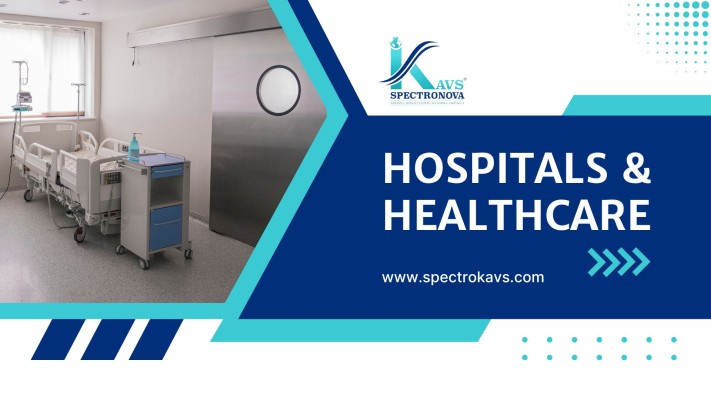
Pharmaceutical Turnkey Solutions for Hospitals and Healthcare Facilities
Ensuring contamination-free environments with precise airflow control for cleanroom and high-grade sterile applications.
What is Unidirectional Air Flow
KAVS Spectronova Technologies Pvt. Ltd. | Pharmaceutical Turnkey Solutions
The Environment Is the Treatment.
Build It Right.
A complete guide to cleanroom technology, hospital HVAC, and pharmaceutical turnkey solutions — for doctors, hospital owners, and healthcare decision-makers.
“You spend every day making decisions that save lives. But there’s one critical decision that happens before your patient ever arrives — the design and engineering of the environment where care is delivered.”
Clean rooms in hospitals play a crucial role in controlling infection and ensuring an aseptic environment for healthcare activities. Whether it’s the operation theatre where you perform a delicate cardiac bypass, the ICU where your most vulnerable patients fight for recovery, the diagnostic lab where a culture is plated, or the hospital pharmacy compounding a sterile IV admixture — the air your patient breathes, the surfaces they touch, and the systems running silently behind the walls determine outcomes just as surely as your clinical skills.
Originally, cleanrooms and controlled environments were built just for surgical suites and pharmacy units inside hospitals. With an increase in hospital-acquired infections and the changing landscape of infectious diseases like COVID-19, healthcare facilities are implementing more cleanroom technology to control contamination and stop the spread of disease.
This isn’t just about regulatory compliance. It’s about the sacred responsibility you carry every time you say, “We will take care of you.”
Introducing Your Infrastructure Partner
KAVS Spectronova Technologies Pvt. Ltd.
KAVS Spectronova Technologies Private Limited is at the forefront of healthcare infrastructure transformation, offering cutting-edge turnkey solutions tailored specifically for Hospital and Healthcare Facilities. With extensive expertise in cleanroom technology, process engineering, HVAC systems, and project execution, the company ensures the design, development, and delivery of healthcare infrastructure that meets global regulatory norms and operational excellence.
25,000
Sq. Ft. Manufacturing Facility
4
International Offices
₹50M+
Largest Single Turnkey Project
100%
First-Pass Audit Clearance Rate
Market Intelligence
Why This Matters Right Now
$17.67B
Global Market by 2034
The global cleanroom technologies market is projected to grow from USD 10.99 billion in 2026 to USD 17.67 billion by 2034, exhibiting a CAGR of 6.1%.
8.4%
India’s CAGR — Highest in Region
India is projected to register the highest CAGR of 8.4%, fueled by emerging manufacturing, particularly in electronics and pharmaceuticals, and government initiatives.
$0.43B
India’s Contribution by 2026
India is forecast to contribute approximately USD 0.43 billion to the global cleanroom technologies market by 2026 — about 3.9% of global revenues.
For hospitals and healthcare facilities, the message is unambiguous: the market is expanding steadily as healthcare systems worldwide place greater emphasis on product sterility, regulatory compliance, and patient safety.
The Foundation
What Is a Cleanroom? — Explained for Medical Professionals
If you’re a clinician, you already understand sterile technique. A cleanroom takes that concept and engineers it into the very fabric of a room. A cleanroom is a controlled environment where pollutants like dust, airborne microbes, and aerosol particles are filtered out to provide the cleanest area possible.
Cleanrooms are highly regulated environments designed to filter and remove contaminants from the air — including dust, bacteria, and aerosols — to maintain a high level of cleanliness. They are divided into categories based on the amount of particulate matter permitted in the air.
In Hospital Terms
Think of a cleanroom as an environment where the air is systematically purified, the pressure is precisely controlled, the temperature and humidity are monitored in real time, and every surface is engineered to resist microbial colonization. It’s the difference between a sterile field on a surgical drape and a sterile field that is the room itself.
Cleanroom Classifications That Matter to Hospitals
| ISO Class | Particles ≥0.5µm/m³ | Hospital Application |
|---|---|---|
| ISO 5 (Grade A) | 3,520 | Operating theatres (critical zone), aseptic compounding |
| ISO 7 (Grade C) | 352,000 | Hospital pharmacy, prep areas, transplant wards |
| ISO 8 (Grade D) | 3,520,000 | General support areas, gowning corridors |
Cleanrooms are vital in infection-prone and critical areas such as ICUs, burn units, transplant wards, and operating theatres.
Critical Infrastructure
What Does HVAC Do in a Hospital? — Far Beyond Air Conditioning
As a doctor, you know that Hospital-Acquired Infections (HAIs) are a leading cause of morbidity and mortality. Indoor air pollutants’ negative impact and hospital-acquired infections (HAI) is 19% higher in developing countries due to high air pollution.
The HVAC system in a hospital is not an air conditioner. It is an infection prevention system.
How Hospital HVAC Works: The Four Pillars
🌬️
1. Air Filtration
HEPA filters — the gold standard — remove at least 99.97% of particles sized 0.3 microns, including bacteria, viruses, and fine dust. Multi-stage filtration ensures hospital-grade air quality at every point of delivery.
⚖️
2. Pressure Differentials
Positive pressure (OTs, immunocompromised wards): Internal air flows outward, preventing contaminants from entering. Negative pressure (isolation rooms): Prevents infectious air from spreading outside. Each is precisely engineered per zone.
🌡️
3. Temperature & Humidity Control
Temperature maintained at 21°C–26°C. Relative humidity kept between 60%–70%. These parameters directly impact microbial growth rates, patient comfort, and the performance of surgical equipment and sensitive diagnostics.
🔄
4. Air Changes Per Hour (ACH)
100% fresh air systems with laminar flow distribution and ≥12 ACH (ICUs), ≥20 ACH (ultra-clean OTs), combined with HEPA filtration and pressure-based zoning, are universally accepted measures to reduce hospital-acquired infections.
Clinical Insight
Why should doctors personally understand HVAC? Knowledge and understanding of proper functioning of HVAC systems is crucial for critical care physicians, infection control committee members, and administrators to provide optimal safety and comfort to ICU patients, staff, and visitors — while reducing the spread of airborne infections. KAVS offers energy-efficient, highly filtered HVAC systems to maintain sterile zones with precision air temperature, humidity, and pressure control.
Contamination Control
Why Are Pass Boxes Critical in Healthcare Settings?
Here’s a scenario every surgeon and ICU physician knows: a nurse opens the OT door to bring in a tray of instruments. In that brief moment, the pressure differential is disrupted and corridor air — laden with particles — rushes in. Infection risk just increased.
Pass Boxes solve this exact problem.
📦 Static Pass Boxes
Transfer materials between areas of the same cleanliness level — no additional filtration needed. Interlocking doors prevent both sides from opening simultaneously, maintaining zone integrity.
🔬 Dynamic Pass Boxes
Include built-in HEPA filtration, creating an air barrier during transfer. Essential when moving items between classified and non-classified zones — the gold standard for operating theatres and sterile pharmacies.
🏥 Real-World Hospital Application
Central Sterile Supply Department (CSSD) to Operating Theatre
Sterilized instrument trays must reach the operating theatre without exposure to corridor air. A dynamic pass box allows this seamlessly — the sterilized tray enters a HEPA-purged chamber, and your surgical team retrieves it on the clean side without ever opening a door between zones. Zero pressure disruption. Zero contamination risk.
Equipment Arsenal
LAF Units, Biosafety Cabinets & Isolators — The Essential Equipment
🌊 Laminar Air Flow (LAF) Units — Your Invisible Sterile Shield
A Laminar Air Flow unit creates a localized zone of ultra-clean air by pushing HEPA-filtered air in a smooth, unidirectional stream — like a continuous curtain of sterile air protecting your work surface. KAVS LAF units are engineered to ISO Class 5–8 standards using stainless steel fabrication with precision laser cutting and TIG welding.
Hospital Applications
- Diagnostic Microbiology Labs: Prevents false positives from environmental contamination
- Hospital Pharmacies: Compounding sterile IV admixtures at ISO 5 conditions
- Blood Banks: Component separation and storage under laminar flow
🛡️ Biosafety Cabinets (BSCs) — When the Sample Is Dangerous
If an LAF protects the product from the environment, a Biosafety Cabinet protects the operator from the product — and often protects both simultaneously. Understanding the classification is critical for every department head and infection control officer.
| BSC Class | Protects Operator | Protects Product | Protects Environment | Typical Hospital Use |
|---|---|---|---|---|
| Class I | ✅ | ❌ | ✅ | Handling known low-risk agents |
| Class II | ✅ | ✅ | ✅ | Most common — TB sample processing, pathology, virology |
| Class III | ✅ (Max) | ✅ | ✅ | BSL-3/4 — Ebola, SARS-CoV-2 variants research |
Real-World Example
Your microbiology department receives a sputum sample from a patient suspected of drug-resistant tuberculosis. The technician processes it inside a Class II BSC — the inward airflow protects the tech, the downward HEPA-filtered flow protects the sample, and the exhaust HEPA filter protects the entire lab environment.
🔒 Isolators — The Ultimate Containment Barrier
For the highest-risk pharmaceutical operations and clinical applications, isolators provide an absolute physical barrier between the operator and the process. Unlike BSCs where a partial air curtain creates protection, an isolator is a completely sealed enclosure — the operator works through glove ports, materials enter through validated transfer systems, and there is zero direct air exchange with the room.
💊 Compounding of hazardous drugs (cytotoxic / oncology)
💉 Aseptic filling of sterile injectables
🧪 Handling HPAPIs & BSL-3/4 pathogen research
Systems Integration
How It All Works Together
A real-world hospital operation theatre — designed and delivered by KAVS Spectronova Technologies
01
The Infrastructure Foundation
Modular cleanroom panels form the walls and ceiling. Surfaces are seamless, non-porous, and coved at floor junctions — no corners for microbes to colonize. Electrical systems are flush-mounted and sealed.
02
The HVAC System — The Invisible Protector
Conditioned air passes through pre-filters then HEPA filters (99.97% at 0.3µm). It enters the OT through a ceiling-mounted laminar diffuser above the surgical table, creating unidirectional downward flow. OT maintained at +15 Pa positive pressure — clean air always flows outward.
03
Material Transfer via Dynamic Pass Box
Sterilized instruments arrive from CSSD through a dynamic pass box in the wall. The scrub nurse retrieves them without any door opening between the sterile corridor and operating room. Zero pressure disruption.
04
The Operation
Under the laminar air field, the surgeon operates in an effective ISO 5 zone — the cleanest possible environment. HVAC continuously monitors and adjusts temperature (21–24°C), humidity (50–60%), and air changes (>20 ACH for ultra-clean OTs).
05
Post-Procedure Reset
Surgical waste exits through a separate pass-out system. The room undergoes a purge cycle with increased ACH before the next procedure. This integrated system is precisely what KAVS Spectronova delivers — from the first blueprint to the final validation report.
Regulatory Framework
Compliance Standards — What Your Hospital Must Meet
Today’s hospital infrastructure must comply with standards like NABH, WHO GMP, USFDA, and EU GMP, especially in critical care areas like operation theatres, ICUs, emergency units, and labs.
| Standard | What It Governs | Why Your Hospital Needs It |
|---|---|---|
| ISO 14644 | International standard for cleanrooms, regulating cleanliness levels from ISO Class 1 to ISO Class 9 based on airborne particle count | Defines the classification of your OTs, labs, and pharmacies |
| WHO-GMP | International baseline for manufacturing quality and environmental control | Required if your pharmacy compounds any sterile preparations |
| US FDA (cGMP) | Current Good Manufacturing Practice for drugs and devices | Essential if you supply or use products destined for the US market |
| EU GMP (Annex 1) | One of the strictest sterile manufacturing guidelines; defines Grades A–D | Gold standard for aseptic processing areas |
| NABH | National Accreditation Board for Hospitals (India) standards for healthcare quality and safety | India’s benchmark for hospital accreditation — requires strong infection control protocols |
| ASHRAE | HVAC design guidelines for healthcare facilities | Ensures proper infection control, reliability, low maintenance, and energy-efficient HVAC systems |
KAVS provides highly functional, regulatory-compliant cleanroom equipment and infrastructure. The team designs, engineers, and fabricates a wide range of cleanroom-grade equipment with complete adherence to cGMP, ISO 14644, and EU-GMP norms.
Your Trusted Partner
Why KAVS Spectronova Is the Partner Healthcare Trusts
Smart Solutions, Global Impact — this is the motto that drives KAVS Spectronova. Based in Thane, Maharashtra with a 25,000 sq. ft. manufacturing facility at Umergaon, Gujarat, the company specializes in cutting-edge pharmaceutical engineering services that meet global standards of quality, precision, and safety. Their approach: collaborate closely with clients, understand unique needs, and design customized solutions ensuring both operational excellence and regulatory compliance.
What “End-to-End Turnkey” Actually Means
| Phase | What KAVS Delivers |
|---|---|
| 🎯 Concept & Consultancy | GMP-compliant layout design, process flow optimization, regulatory gap analysis |
| 📐 Detailed Engineering | CAD/BIM drawings, P&IDs, utility layouts, equipment positioning |
| 🏭 Manufacturing | In-house fabrication of cleanroom panels, pass boxes, LAF units, BSCs, air showers, furniture |
| 🔧 Construction & Installation | Modular panel erection, HVAC system installation, electrical integration |
| ✅ Validation & Commissioning | IQ/OQ/PQ protocols, environmental monitoring, documentation for regulatory audits |
| 🤝 Post-Handover Support | AMC, training, ongoing calibration and revalidation |
“The team at KAVS SPECTECH responded quickly to an urgent project request. Our project timelines were jeopardized by an unforeseen issue with another vendor and KAVS came to the rescue. In a very short timeframe, KAVS SPECTECH provided a solution to our Cleanroom problem that far exceeded my expectations and allowed us to stay on track for an urgent audit trial.”
— Client Testimonial, KAVS Spectronova Technologies
Proven Track Record with Industry Leaders
₹50M
BE Pharmaceuticals Turnkey
Commissioned in under 5 months — based on technical and design clarity. Full design, supply & execution.
16 Wks
BSL-III Lab, Central India
500 sq.m BSL-III Lab. WHO audit clearance on the first pass. Full design, construction & validation.
<90 Days
EU-GMP Certified, Gujarat
15,000 sq.ft sterile injectable unit. EU-GMP certification post-handover. ISO Class 7, full validation support.
Clients & Partners Include
Ajanta Pharma · Cipla · Hikal · Lab India · Hyatt Biotech · Fujairah Hospital · BE Pharmaceuticals
Investment Planning
The Cost of Cleanroom Setup in India — What to Realistically Expect
The construction cost of standard cleanrooms for pharmaceutical and medical device manufacturing may range between USD 100 to more than USD 1,500 per square foot, depending on classification, equipment, and compliance requirements.
| Cost Factor | Impact on Investment |
|---|---|
| 🏷️ Cleanroom Classification | ISO 5 is significantly more expensive than ISO 8 — higher ACH rates, more HEPA filters, tighter construction tolerances |
| 📐 Total Area | Economies of scale apply — per sq. ft. cost typically decreases with larger facilities |
| ⚗️ Type of Application | Sterile injectable line costs more than oral solid dosage; hospital OT differs from diagnostic lab requirements |
| 🔬 Equipment Requirements | Isolators, advanced BSCs, and dynamic pass boxes add cost but may be regulatory mandates |
| 📋 Compliance Target | EU GMP Annex 1 demands more investment than basic WHO-GMP — but opens premium markets |
| 📍 Geographical Location | Costs vary across Indian states due to labor, material availability, and logistics |
Why KAVS Delivers Superior Value
Because KAVS handles everything in-house — from design and panel manufacturing to equipment fabrication and validation — there are no hidden vendor markups, no coordination delays, and no accountability gaps. This vertical integration translates directly into cost savings and faster project delivery for you.
Global Presence
Global Expansion — KAVS Goes International
KAVS has established offices in the US, South Africa, Egypt & Uzbekistan, with a major partnership with Ambergo (European company) to cater to Europe & Middle East markets. Whether you’re building a hospital in Mumbai, expanding to Dubai, or establishing a compounding pharmacy in Lisbon — KAVS is your single trusted partner across continents.
🇦🇪
Dubai, UAE
Gateway to the Middle East’s growing healthcare construction sector. GCC cleanroom market expected to reach USD 0.15 billion by 2026.
🇵🇹
Braga, Portugal (EU)
Direct entry to the European Union market. Enables EU GMP Annex 1 compliance for European hospital and pharma clients.
🇪🇬
Egypt
North Africa’s largest healthcare and pharmaceutical market. Growing demand for local cleanroom infrastructure and regulatory capability.
🇺🇸
USA
The world’s largest pharmaceutical and healthcare market. Enables US FDA-compliant project delivery on the ground in North America.
Innovation & Future
2026 and Beyond — The Future of Hospital Cleanroom Technology
In 2026, cleanroom standards are being more strictly updated to improve air quality. KAVS is already investing across all four frontiers — positioning itself, and its clients, for the healthcare future.
🤖
AI-Driven Environmental Monitoring
Intelligent HVAC senses user-space interaction and modifies the environment accordingly — with minimal energy use. Contributing to the ‘green hospital’ of tomorrow.
🧩
Modular Cleanroom Systems
Growing at CAGR of 9.0%. Modular systems allow hospitals to rapidly deploy, reconfigure, or expand cleanroom environments without costly reconstruction or operational disruption.
⚡
Energy-Efficient HVAC
Energy-efficient cleanrooms represent a new frontier in long-term commitments to sustainability and cost reduction for pharmaceutical and medical device manufacturers.
🧬
Advanced Containment for Next-Gen Therapies
As hospitals become centers for cell therapy and personalized medicine, isolator technology and BSL-3/4 lab capabilities will become standard requirements — driven by the growing pipeline of biologics and vaccines.
Your Next Step
Let’s Build Something That Saves Lives
Every particle filtered, every pressure differential maintained, every pass box transfer completed without contamination represents a life protected. KAVS Spectronova is ready to be your end-to-end partner — from the first consultation to the final validation certificate, and for years of reliable performance thereafter.
📍 HQ: Thane, Maharashtra, India
🏭 Manufacturing: Umergaon, Gujarat (25,000 sq. ft.)
📞 Phone: +91 99674 36808
📧 Email: [email protected]
Whether you’re planning a new hospital, upgrading an existing OT, setting up a diagnostic lab, or building a pharmaceutical manufacturing facility — your patients deserve an environment as excellent as the care you provide.
Knowledge Base
Frequently Asked Questions
Q1: What exactly is a cleanroom, and why does my hospital need one?
A cleanroom is a controlled environment where airborne particles, microbes, dust, and chemical vapors are systematically filtered and maintained at extremely low levels. Clean rooms can strictly control various factors such as dust particle density, temperature, humidity, pressure, and cross-contamination risk. Your hospital needs cleanrooms in areas where contamination directly threatens patient outcomes — operation theatres, ICUs, burn units, transplant wards, sterile processing departments, diagnostic labs, and pharmacy compounding areas. One of the most important benefits is their ability to prevent infections by managing the concentration of particles without affecting temperature, humidity, and pressure.
Q2: How is a hospital HVAC system different from a regular building HVAC?
The primary role of HVAC in a hospital is to improve indoor air quality and mitigate airborne transmission of diseases — not just comfort, as in regular buildings. Hospital HVAC uses multi-stage HEPA filtration, maintains precise pressure differentials (positive for OTs, negative for isolation rooms), controls temperature and humidity within tight ranges, and delivers high air change rates (≥12 ACH in ICUs, ≥20 ACH in ultra-clean OTs). Regular building HVAC prioritizes comfort; hospital HVAC prioritizes infection prevention.
Q3: Why are Pass Boxes so important in a hospital?
Pass Boxes prevent the contamination that occurs every time a door between two zones is opened. In an operating theatre or sterile pharmacy, even a momentary door opening can disrupt the pressure differential and introduce airborne contaminants. Pass boxes feature interlocking doors — both sides cannot be open simultaneously — creating a sealed transfer chamber. Dynamic pass boxes add HEPA filtration for even greater protection, essential for transferring instruments between classified and non-classified areas without any contamination risk.
Q4: What compliance standards does my hospital cleanroom need to meet in India?
In India, hospital cleanrooms should comply with ISO 14644 (cleanroom classification), NABH (National Accreditation Board for Hospitals), and relevant WHO-GMP guidelines. If your hospital pharmacy compounds sterile preparations, US FDA cGMP and EU GMP Annex 1 may also apply depending on your market. KAVS designs GMP-compliant facility layouts to meet all these global standards and can guide you through the appropriate regulatory pathway for your specific application.
Q5: How much does a pharmaceutical cleanroom setup cost in India?
The construction cost of standard cleanrooms may range between USD 100 to more than USD 1,500 per square foot. In India, costs are generally competitive compared to Western markets, but vary based on cleanroom classification (ISO 5 vs. ISO 8), total area, equipment requirements, compliance targets, and location. KAVS offers transparent, optimized costing through vertical integration — handling design, manufacturing, and execution under one roof — which eliminates hidden markups and reduces overall project cost significantly.
Q6: Can KAVS handle both hospital projects and pharmaceutical manufacturing facilities?
Absolutely. KAVS cleanroom systems are trusted across diverse sectors including Pharmaceuticals (sterile manufacturing, R&D, packaging lines) and Biotechnology (gene therapy, vaccines, tissue culture labs). They have delivered projects for major pharmaceutical companies like Cipla and Ajanta Pharma as well as for healthcare facilities like Fujairah Hospital. Their integrated expertise spans the full spectrum from hospital OTs and diagnostic labs to BSL-3/4 laboratories and sterile injectable manufacturing plants.
Q7: Does KAVS support projects outside India?
Yes. KAVS has established offices in Dubai (UAE), Braga (Portugal – EU), Egypt, and the USA. They have also completed international consignments in Europe and partnered with European companies to serve the Middle East and EU markets. Whether your project is in India or overseas, KAVS offers the same standard of engineering excellence, regulatory compliance, and project delivery speed.
Q8: What should I ask during my first consultation with KAVS?
- 1. What cleanroom classification do I need for my specific application?
- 2. What compliance standards must my facility meet?
- 3. What is the realistic timeline and budget for my project?
- 4. What equipment (LAF, BSC, Isolator, Pass Boxes) does my operation require?
- 5. How will the HVAC system be designed for my specific infection control needs?
- 6. What ongoing support (AMC, revalidation, training) is included post-handover?
KAVS Spectronova Technologies Pvt. Ltd.
Thane, Maharashtra | Umergaon, Gujarat | Dubai | Braga | Egypt | USA
[email protected] | +91 99674 36808
Table of Contents
Toggle